

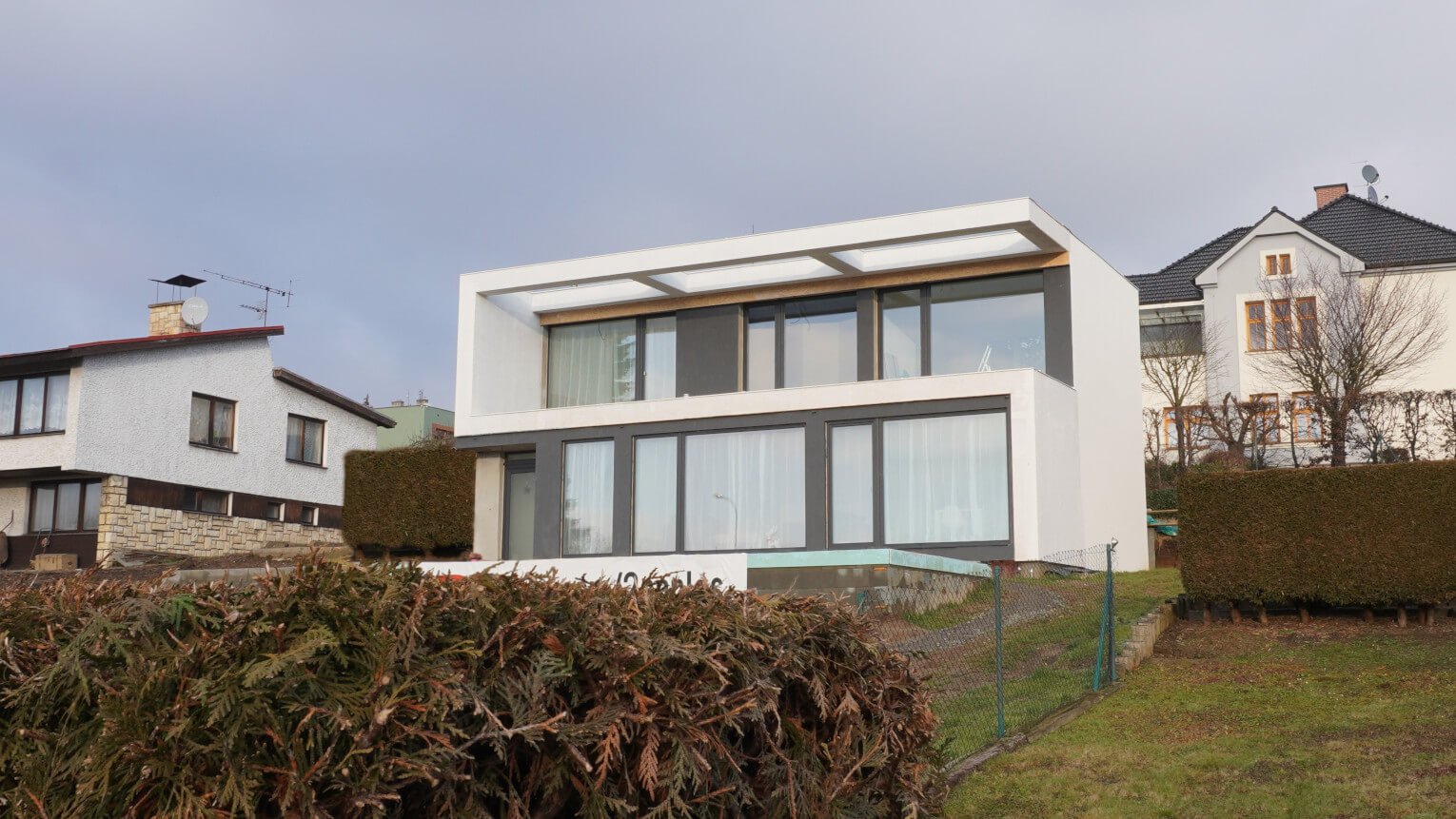
How much power does infrared heating use?
The annual electricity consumption of infrared heating is determined by the building's heat loss and its floor area. According to our customers' planned data, a new 121 m² house with a heat loss of 40 W/m² uses 4,530 kWh of electricity a year for heating, and a renovated 141 m² family house at 80 W/m² uses 10,560 kWh a year.
In brief
- The annual electricity consumption of infrared heating is determined by the building's heat loss and the heated floor area, not by the name of the heating.
- According to the planned data for our customers' ten houses, 26–75 kWh of electricity per square metre per year is used.
- Heating film gives 1 kWh of heat from 1 kWh of electricity: in September 2026 that is HUF 36.4 up to 2,523 kWh a year and HUF 70.1 above.
- For a household staying in the discounted gas band, heat from gas is cheaper; above the band, it is more expensive.
- No H tariff applies to heating film, and it has no annual maintenance cost.
Planned heating consumption of ten houses
Planned data from our customers' technical proposals, sorted by heat loss. The better insulated the house, the less electricity per square metre.
| Building | Living area | Heat loss | Installed power | Expected consumption | kWh/m²/year | Control |
|---|---|---|---|---|---|---|
| Holiday home | 158 m² | 35 W/m² | 7.8 kW | 5,200–5,700 kWh/year | 33–36 | WiFi thermostat |
| New family house | 121 m² | 40 W/m² | 7.9 kW | 4,530 kWh/year | 37 | smart home |
| New house | 190 m² | 40 W/m² | 14.5 kW | 7,305 kWh/year | 38 | WiFi thermostat |
| Newly built family house | 218 m² | 41 W/m² | 11.6 kW | 5,700 kWh/year | 26 | smart home |
| Holiday home (in a concrete layer, vinyl) | 123 m² | 45 W/m² | 6.6 kW | 5,104 kWh/year | 41 | WiFi thermostat |
| New apartment building | 385 m² | 50 W/m² | 32 kW | 18,018 kWh/year | 47 | smart home, WiFi thermostat |
| Container house | 130 m² | 55 W/m² | 9.9 kW | 7,057 kWh/year | 54 | smart home |
| Renovated house | 79 m² | 75 W/m² | 9.5 kW | 5,546 kWh/year | 70 | thermostat |
| Renovation of an old house (ground floor) | 75 m² | 80 W/m² | 4.8 kW | 3,740 kWh/year | 50 | thermostat |
| Family house renovation | 141 m² | 80 W/m² | 16.3 kW | 10,560 kWh/year | 75 | smart home |
Source: futofolia.hu consumption case studies (2022). The kWh/m²/year column is the expected consumption divided by the living area. At the owners of the "New house", heating electricity use in the first heating season matched the estimate; two customers measure the heating separately with a secondary electricity meter.
Consumption is determined by the building, not by the name of the heating
With every kind of heating, the building's energy loss is the basis of consumption: a well-insulated house being built now needs a fraction of the energy of an old, uninsulated one. If the heat loss is not known, the exact consumption cannot be calculated in advance either, which is why we survey the building.
With infrared heating the same sense of warmth is reached at an air temperature 2–3 °C lower, because the radiation warms the body and objects directly. According to an energy specialists' rule of thumb, every degree of difference means roughly 6% energy.
Besides consumption, upkeep is a cost too: heating film has no moving parts, so there is no annual maintenance or chimney sweeping.
What does 1 kWh of heat cost with gas and with heating film?
At residential prices of September 2026 in Hungary. Heating film gives 1 kWh of heat from 1 kWh of electricity; for a gas boiler we calculate with the calorific value of gas and the boiler's efficiency.
| Heating | Tariff band | Price of 1 kWh of heat |
|---|---|---|
| Heating film | up to 2,523 kWh of electricity a year | HUF 36.4 |
| Heating film | above 2,523 kWh of electricity a year | HUF 70.1 |
| Condensing gas boiler | discounted band, up to 1,729 m³ a year (HUF 102/m³) | HUF 10.6–11.0 |
| Condensing gas boiler | above the discounted band (HUF 747/m³) | HUF 77.7–80.3 |
Calculation: the calorific value of natural gas is 10.225 kWh/m³, and the seasonal efficiency of a condensing boiler is 91–94%. With heating film there is no gas connection, chimney or maintenance cost. No H tariff applies to heating film, so we calculated with general residential electricity. Prices: officina.hu, MVM Next (September 2026).
Our customers' houses up close
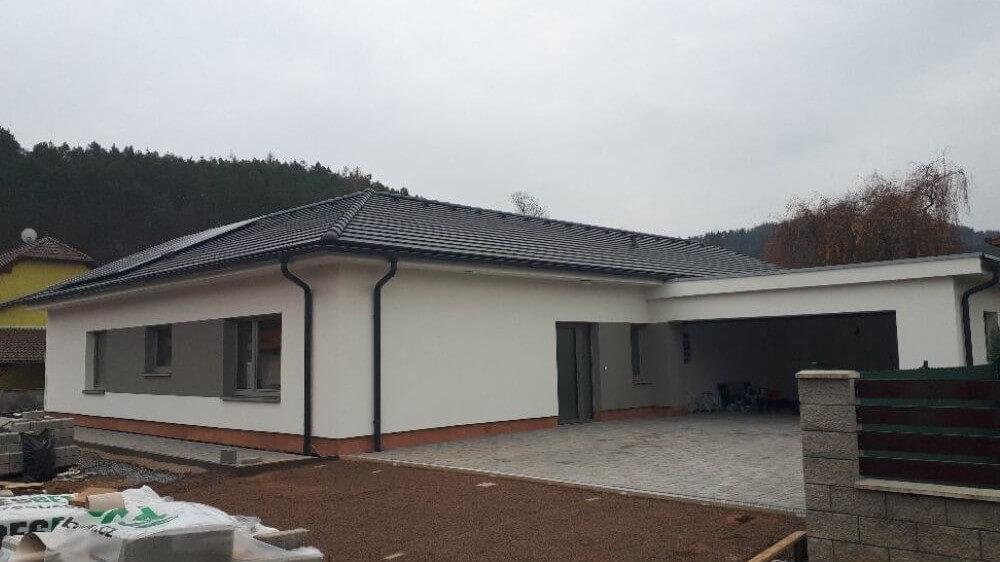
Newly built family house, 218 m²
A family of five in a well-insulated brick house; the heating is measured by a secondary electricity meter, and there are solar panels on the roof too.
Részletek →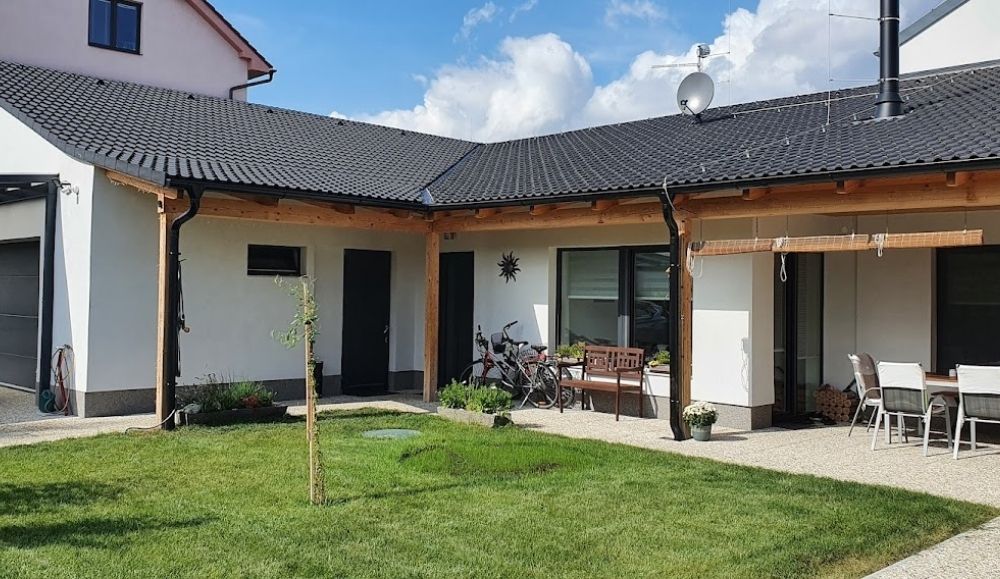
New house, 190 m²
At the owner, a master builder, consumption in the first heating season matched the estimate.
Részletek → Container house, 130 m²
A low-energy house built in 2020; the heating installation was finished in two days.
Részletek →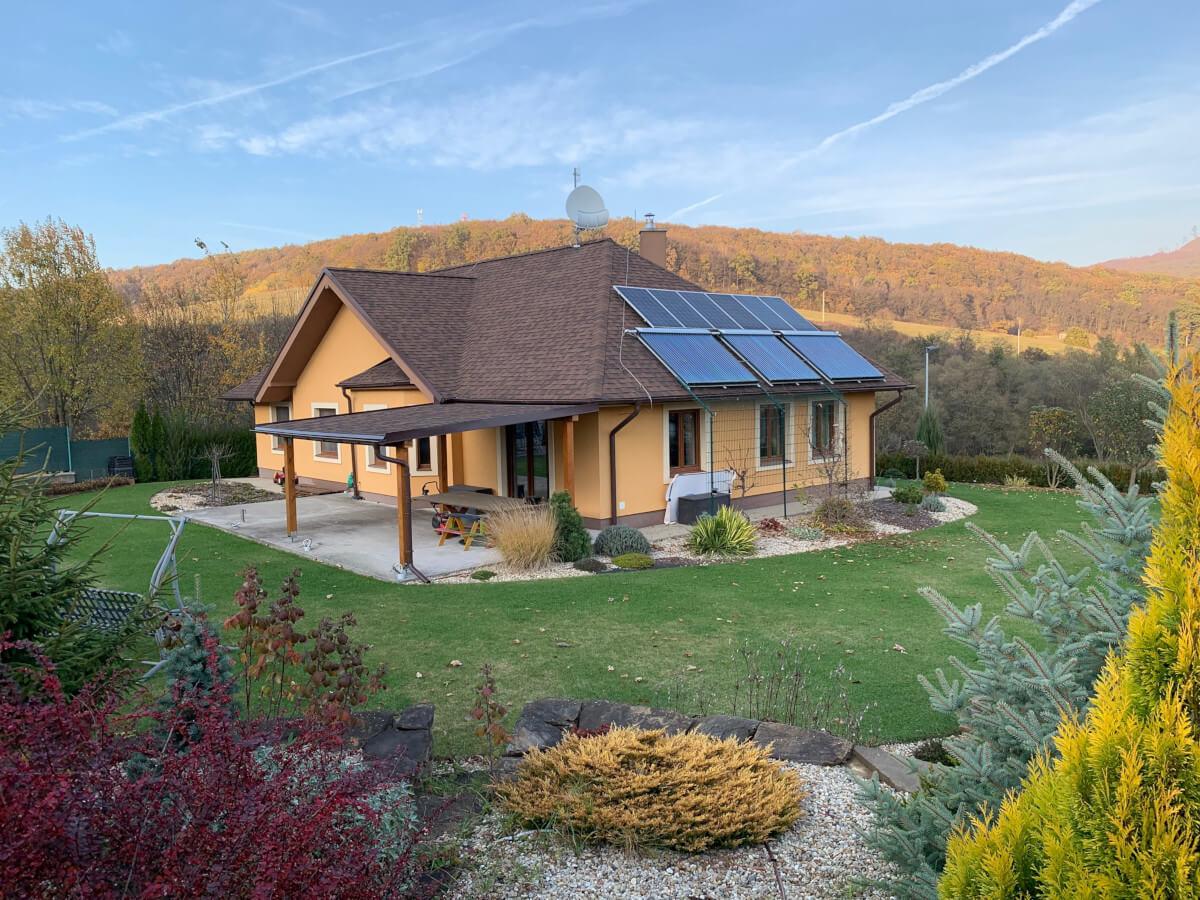
Holiday home, 158 m²
Instead of a wood-burning stove: the concrete floor could not be touched, so the low build height decided it.
Részletek →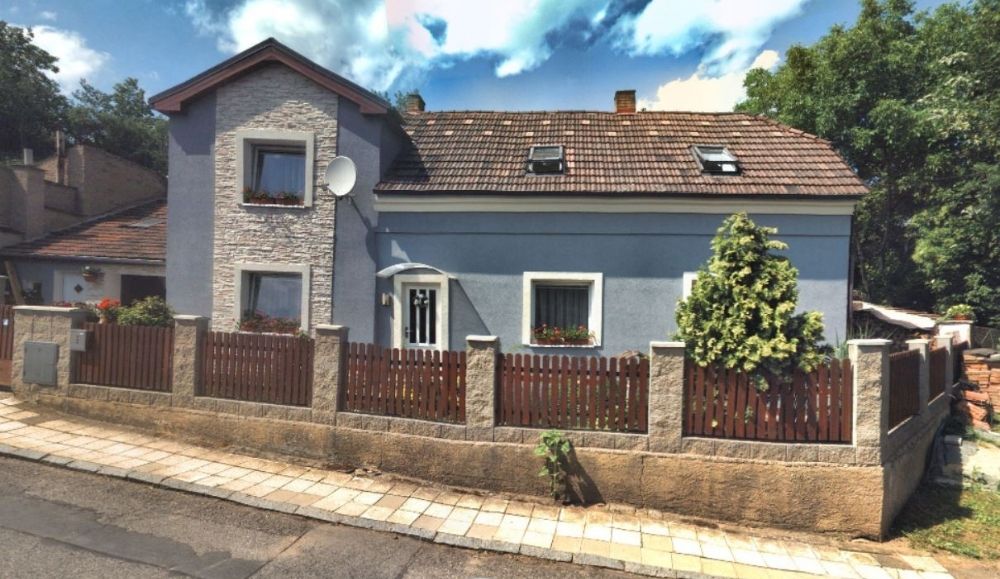
Renovation of an old house (ground floor), 75 m²
Done during the renovation of the ground floor; the family highlights the warm floor in the morning, with a fireplace as supplementary heating.
Részletek →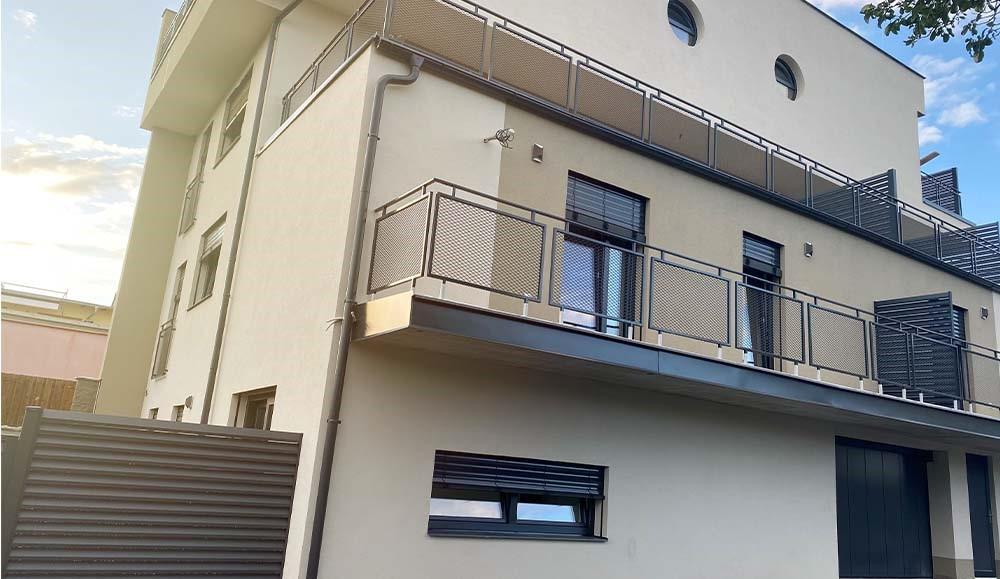
New apartment building, 385 m²
Because of the modified floor slabs, low-build-height underfloor heating was needed instead of a hot-water system.
Részletek →Questions about consumption
How much power does infrared heating use in a family house?
Infrared heating in a family house typically uses 26–75 kWh of electricity per square metre per year, according to the planned data for our customers' ten houses, depending on the heat loss. A new 121 m² house with a heat loss of 40 W/m² uses 4,530 kWh a year for heating, and a renovated 141 m² family house at 80 W/m² uses 10,560 kWh a year. More: infrared heating consumption in reality.
What does the consumption of heating film depend on?
The consumption of heating film depends primarily on the building's heat loss and the heated floor area, and also on the set temperature and control room by room. With infrared heating the same sense of warmth is reached at an air temperature 2–3 °C lower, and according to an energy specialists' rule of thumb every degree of difference means roughly 6% energy. Measuring: measuring electricity consumption at heating film.
How much electricity does 1 m² of heating film draw?
At full power one square metre of heating film draws 0.11 kWh of electricity per hour in the 110 W/m² version and 0.22 kWh in the 220 W/m² version. The thermostat switches it off when the set temperature is reached, so annual consumption is not a simple product of power and hours: it is given by the building's heat loss. Measuring: how to calculate accurately.
What will the monthly electricity bill be with infrared heating?
For a medium-insulated 100 m² house, according to our calculation (from the planned values of our case studies, 50.5 kWh/m²/year), the electricity bill for infrared heating at the above-allowance price is about HUF 354,300 a year; most falls in January, about 1,060 kWh, i.e. about HUF 74,400. What falls within the 2,523 kWh allowance costs about half as much; this is an example calculated from planned values, not measured data. Real houses: infrared heating consumption in reality.
Is heating film cheaper than gas heating?
Heating film is not cheaper to run than gas heating if the household stays in the discounted gas band (up to 1,729 m³ a year, HUF 102/m³): with a condensing boiler 1 kWh of heat is HUF 10.6–11.0, with heating film HUF 36.4 (September 2026 prices). Above the discounted band, however, heat from gas is HUF 77.7–80.3/kWh, which is more expensive than the HUF 70.1/kWh of above-allowance electricity; with heating film there is no gas connection, chimney or maintenance cost. With a heat pump: cost comparison.
Does the H tariff apply to heating film?
No. The H tariff cannot be used for our heating. The consumption of heating film must therefore be calculated with general residential electricity: in September 2026, HUF 36.4/kWh up to 2,523 kWh a year and HUF 70.1/kWh above (MVM Next), and the allowance counts the household's total consumption, not just the heating.
Does infrared heating have maintenance costs?
Infrared heating has no annual maintenance cost, because heating film has no moving parts, pump, combustion chamber or chimney, so no annual service or chimney sweeping is needed. The running cost is therefore the electricity consumption, which is determined by the building's heat loss and the set temperature. Comparison: the disadvantages of infrared heating.
Related pages
Infrared heating: the basics
How it works, and what to look out for before you decide.
Infrared heating consumption in reality
How much is it, really? (article)
Measuring electricity consumption
How to calculate accurately with heating film.
Heating film price and installation
Package prices and comparison with gas.
Infrared heating and air conditioning, measured
Comparative test in an office container.
Electric underfloor heating
Layer build by floor covering, price and consumption.
Request a quote — installation anywhere in Hungary
We survey, design and install heating film and infrared heating throughout Hungary. Tell us about your home and we will get back to you.
Sources
- futofolia.hu consumption case studies (planned data for ten buildings) (2022-03/04)
- futofolia.hu: Consumption (earlier page: heat loss, 2–3 °C lower air temperature, about 6% per degree) (2022-05)
- officina.hu: What does 1 kWh of electricity cost in 2026 (2026-09)
- officina.hu: The price of electricity above 210 kWh a month (2026-09)
- officina.hu: What does 1 m³ of gas cost in 2026 (2026-09)
- MVM Next: On the price of gas (the discounted quantity) (2026-09)