

How Much Is It? Infrared Heating Consumption in Reality
Author: Tóth Tamás · 3 min read
Infrared heating's efficiency is nearly 100%, just like other electric heating – lower consumption comes from the better sense of warmth. How much does a one-degree lower setting mean, and how does room-by-room control help.
Infrared heating does not use less because of its efficiency: every modern electric heating turns electricity into heat with nearly 100% efficiency. The difference is in the sense of warmth. Because radiant heat warms bodies and objects, a room is generally just as comfortable at an air temperature 2–4 degrees lower, and this shows up on the thermostat, and so on the monthly bill.
Efficiency and consumption: what is the difference?
The two concepts are often confused. Efficiency shows what proportion of the electricity drawn becomes heat – in this infrared heating does not differ from other electric heating: the input energy is converted into heat practically in full. Consumption, however, is decided by how much heat has to be brought into the room for the people in it to feel good. At this point infrared panel and heating film systems can get by with less than convection heating, which warms the air.
Why is a lower temperature enough?
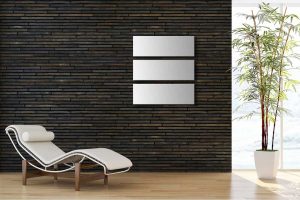
A radiator or convector heats the air, and the warm air carries the heat onwards. Meanwhile it constantly stirs up dust, and the wall surface above and behind the heater may discolour over time. Radiant heating, by contrast, warms the people, furniture, walls and floor in the room; these surfaces then give off heat themselves, so almost every object in the room works a little like a heater. The feeling is similar to stepping out of the shade into the sun: the air is the same, yet it feels warmer.
The hemispherical ceramic particles on the surface of the panel scatter the radiation in every direction. The system heats the surrounding objects 1–2 degrees warmer than the room air. When the thermostat switches off on reaching the set temperature, the space tries to even out the difference: the surfaces give back the heat stored in them – not much, but without further electricity use.
The vertical distribution of temperature is also more favourable. With conventional heating the difference between floor and ceiling can be as much as 8–10 °C, with infrared panel heating at most 2–4 °C – and it is often warmer exactly near the floor, where the feet can feel it.
What does this mean on the bill?
It is a general experience that a 1-degree change of the thermostat changes heating consumption by roughly 6%. If, thanks to the better sense of warmth, we set the thermostat to 20 degrees instead of 23, that is a saving of around 3 × 6 = 18%. The actual value differs from person to person and from building to building: the sense of warmth is individual, and the basis of consumption is always the building's energy loss – a well-insulated new house and an uninsulated old building give completely different numbers. We have collected measured consumption data for various properties on our consumption page.
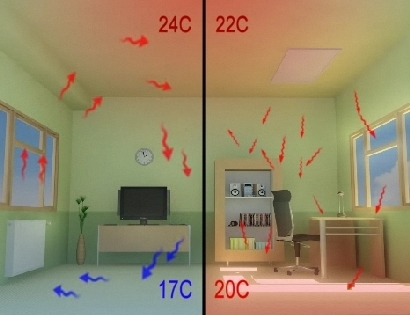
A different temperature in each room
Consumption is also reduced if every room is only as warm as its use justifies. The general view is that 21 °C is ideal in the living room and 18–19 °C is most pleasant in the bedroom; small children – especially babies – need a degree or two more, and for bathing a baby a room of 23–24 °C is recommended.
Infrared heating can be used as stand-alone and as supplementary heating, and its control can be adapted to needs: it can be simple, directly switched, adjustable by a thermostat in each room, controlled from a smartphone or connected to a central Wi-Fi system. This way it heats where and when it is really needed.
Infrared panels in the webshop
The products below were listed under the original article. The current prices and availability are shown on the product page (Hungarian-language shop, delivery within Hungary).
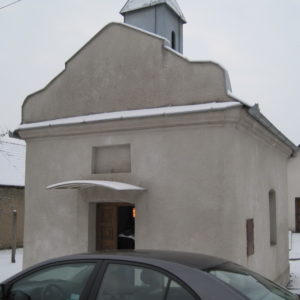 Church heating infrared panel 100CH 100W
- Church heating infrared panel 150CH 150W P
- Church heating infrared panel 200CH 200W
How much consumption there will be in a given building can be estimated once the heat loss is known. You can enter the building's data on the request-a-quote page, and we plan on that basis (installation is available in Hungary).
Request a quote — installation anywhere in Hungary
We survey, design and install heating film and infrared heating throughout Hungary. Tell us about your home and we will get back to you.