

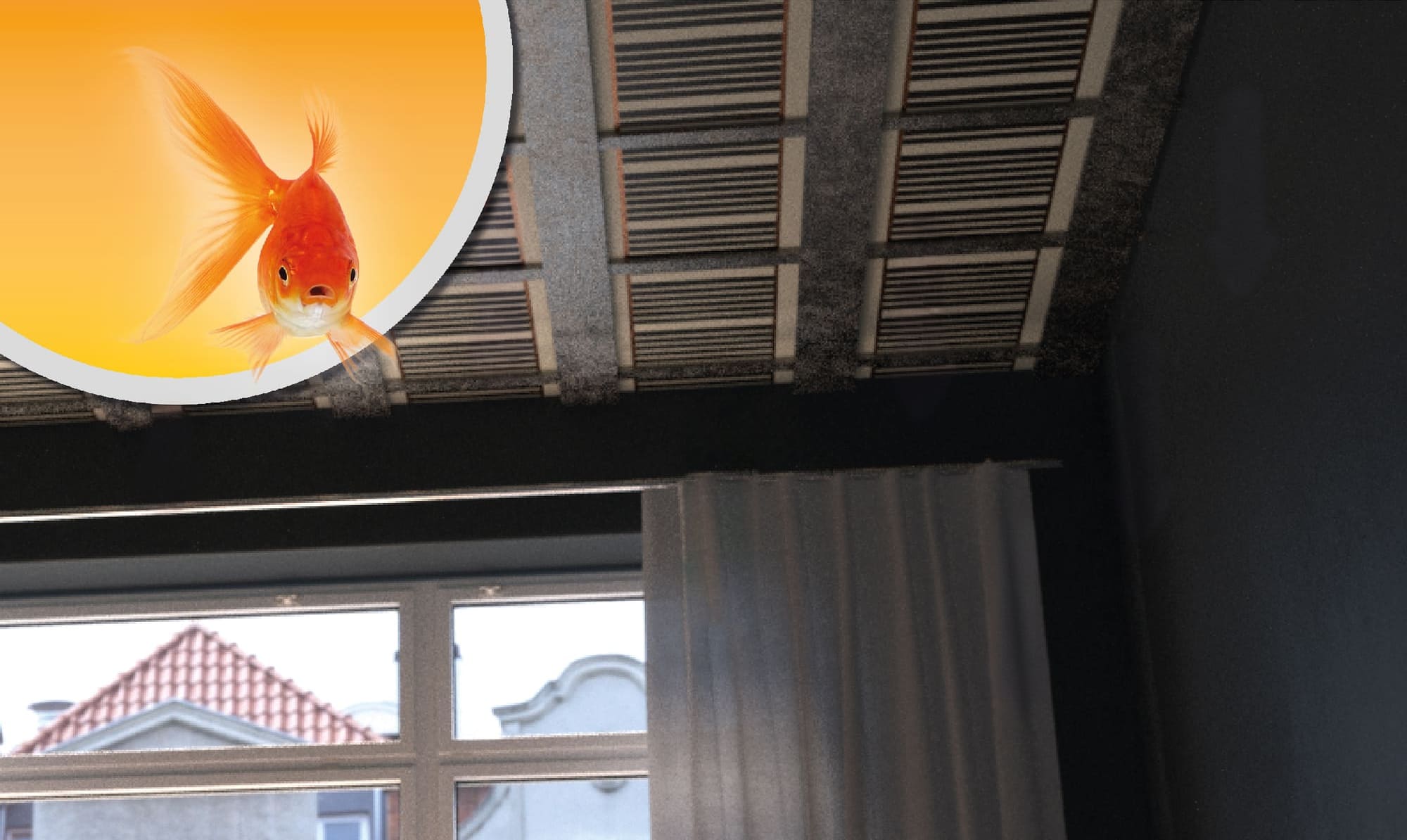
Infrared ceiling heating with heating film
With ceiling heating, the heating film goes behind a plasterboard suspended ceiling, with a reflective foil facing the slab. It radiates downwards: first it warms the people and objects in the room, then the whole space, the floor included.
Doesn't the heat rise? Radiation does not heat the air
Many people first think that warm air rises, so ceiling heating stays up under the ceiling. With infrared heating this is not how it works: the heating film gives off radiant heat that warms the people, furniture and floor in the room. The warmed surfaces then give off heat themselves.
That is why ceiling heating is dynamic: people in the room feel the warmth within 5–15 minutes, and then the whole space warms up gradually. The floor does not stay cold either, and in the room you cannot feel whether the heating is in the ceiling or in the floor.
Control is room by room here too, with a thermostat or a smart-home system: it heats only where and when needed, and the bathroom, for example, can be set warmer than the bedroom.
It can also be installed retrospectively without breaking up the floor, which makes it a particularly good solution for renovations and in rooms full of furniture.
When is it worth putting the heating in the ceiling?
In new construction
The film goes above the plasterboard when the suspended ceiling is built, so it is installed without extra demolition, as part of the normal work sequence.
In a room full of furniture
A bedroom has little free floor area. Furniture does not cover the ceiling, so its whole surface can heat. Floor and ceiling heating can also be mixed within one home.
In a renovation
If the floor covering cannot or should not be taken up, or it would cause a difference in level, the upgrade can be done in the ceiling as well.
In an office or shop
Where quick heat-up is needed: the heating starts shortly before work begins and gives warmth quickly. In a hunting shop in Csorna it also went into the ceiling.
Részletek →In a storeroom or rarely used room
Here the heating film can even go directly on the ceiling without covering.
In a healthcare space
We also wrote up the experience of ceiling heating installed in an operating theatre.
Részletek →Infrared ceiling heating layer build
Seen from the room: plasterboard, the plasterboard support structure, the heating film, the reflective foil and insulation, and finally the slab. The reflective foil sends heat heading towards the slab back into the room.
- Plasterboardthe covering facing the room
- Plasterboard support structure
- Intelligent heating film
- Reflective foilsends the heat back towards the room
- Insulation
- Slab
Ceiling heating, floor heating or wall heating?
All three are the same radiant heating. The difference is in the installation and in when each is the obvious choice.
| Ceiling heating | Floor heating | Wall heating | |
|---|---|---|---|
| Where does the film go? | Behind a plasterboard suspended ceiling | Under the floor covering | On the wall, behind plasterboard or a wall covering |
| Can it be retrofitted? | Yes, without breaking up the floor | By taking up the floor covering | Yes, the floor does not need to be touched |
| Furniture | Does not cover the ceiling | Intelligent film reduces its power in the covered part | No furniture can go in front of a heated section of wall |
| When is it best? | Bedroom, office, renovation | New build, tiled floors, cold feet | As supplementary heating, for damp walls |
Based on the descriptions on the futofolia.hu ceiling, floor and wall heating pages. Within one home the solutions can be combined.
What the ceiling looks like before covering
The heating film goes into the plasterboard support structure, covered by reflective foil facing the slab. After connection and measurement, the ceiling is closed from below with plasterboard: in the finished room nothing of the heating is visible.
In new construction this is one step of building the suspended ceiling; in a renovation the heating film goes above the new suspended ceiling.
What to watch for when preparing for ceiling heating
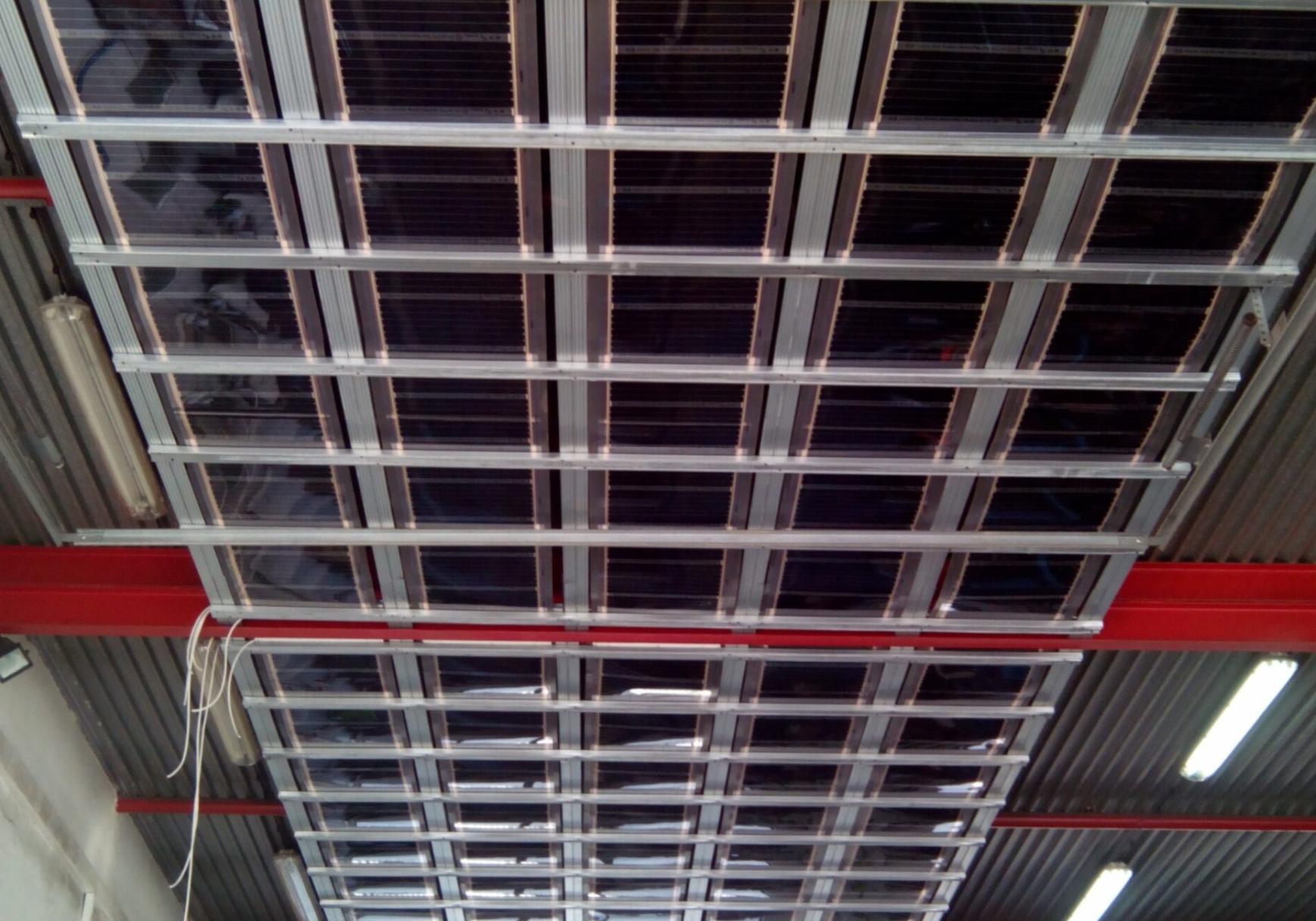
Ceiling heating in practice
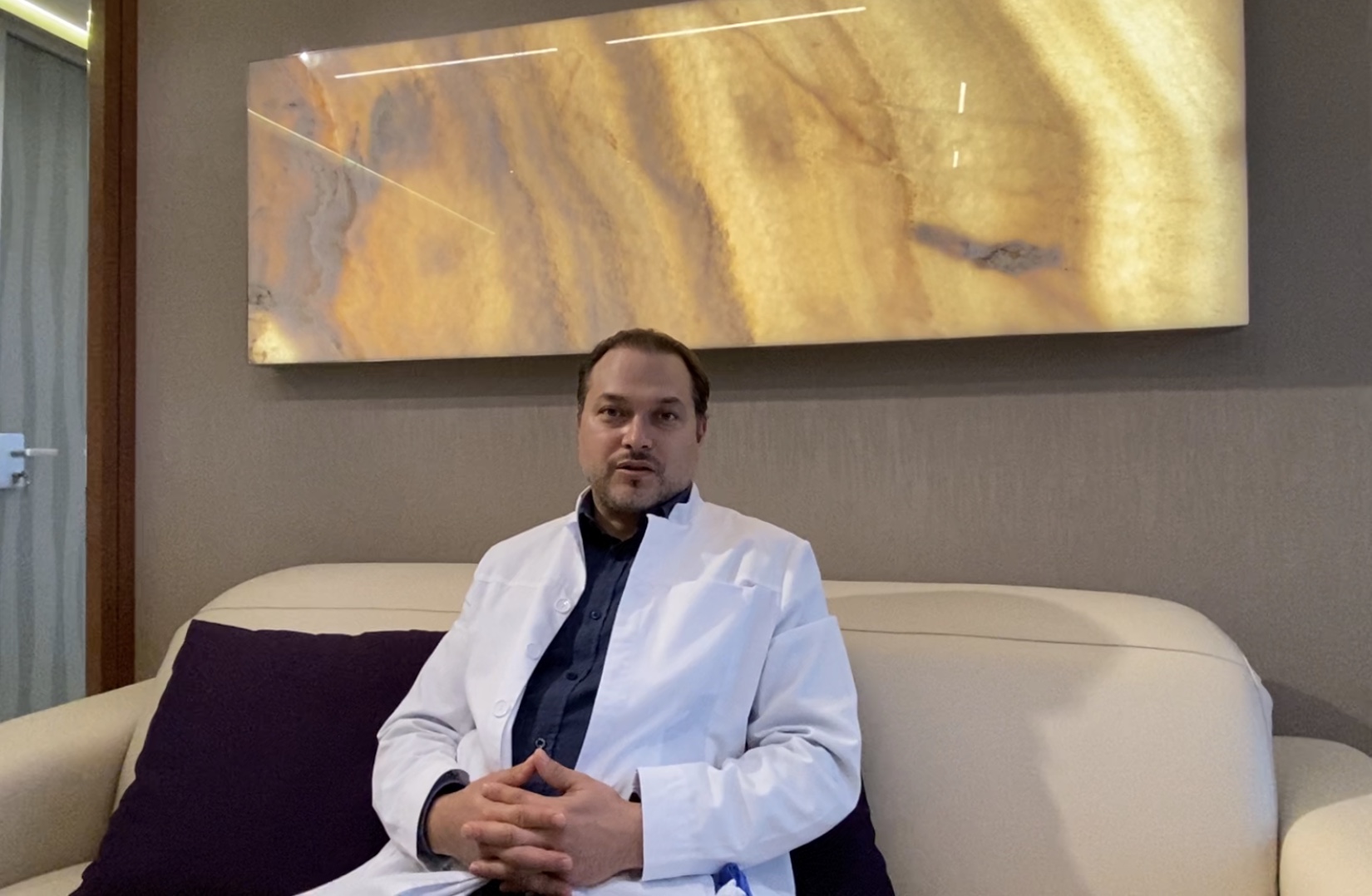
Ceiling heating in an operating theatre
In a healthcare space, dust-free, even warmth matters too.
Részletek →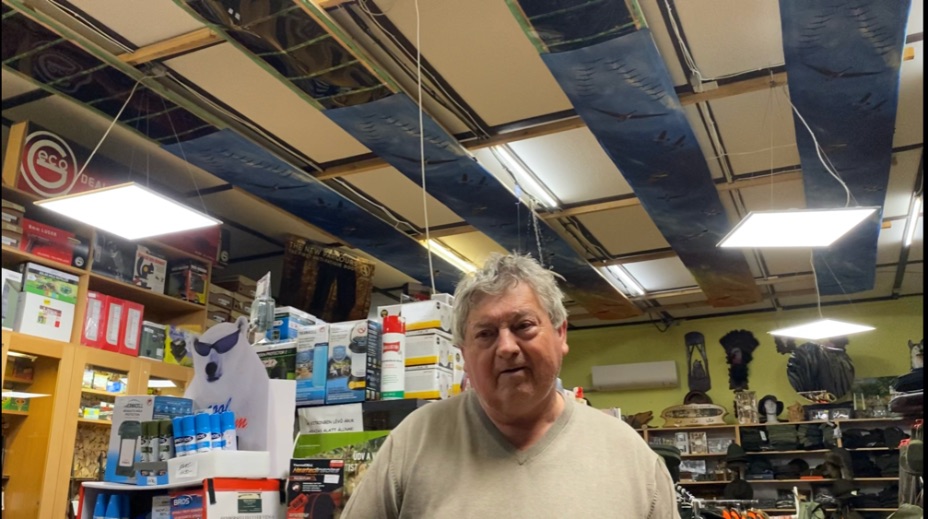
Hunting shop, Csorna
A shop where the owner tried several kinds of heating before the heating film went on the ceiling.
Részletek →Floor and ceiling heating in one home
In Erzsébet's home a different solution suited each room, so a combined system was built.
What do people who heat this way say?
"We had read and heard a lot about infrared heating and heating films, and the family had been interested in this option for a long time, but only a few months ago did we get as far as buying and using it. It has lived up to the hopes placed in it, it gives a very pleasant warmth, and the air really is of better quality because of it!"
Imre Kelemen (his account, in Hungarian)
"My child is asthmatic and also suffers from various allergies, so replacing the underfloor heating installed in the house decades ago was a pressing problem. We chose heating film for its air-cleaning effect and health benefits. Both of us have felt much better since this system started working in our home."
Dorottya Nemes, teacher, Pest county
"I am something of an expert in cooling, but I needed help with heating: I wanted to replace the ageing, uneconomical radiator system in our house. At first I was quite closed to infrared heating, but after some research my opinion changed completely."
Péter Bíró, head of an air-conditioning engineering company
Customer reviews previously published on the futofolia.hu ceiling-heating page. More: infrared heating for ceilings: reviews (Hungarian).
Questions about ceiling heating
Doesn't the heat rise if the heating is in the ceiling?
The warmth of ceiling heating does not stay under the ceiling, because the heating film does not heat the air but gives off radiant heat downwards. The radiation warms the people, furniture and floor in the room, and the warmed surfaces give off heat themselves, so the warmth is felt where you are, and the floor does not stay cold. More: how infrared heating works.
How efficient is ceiling heating in a modern, well-insulated house?
In a modern, well-insulated house, infrared ceiling heating also converts all the electricity it draws into heat, and radiates downwards from the ceiling towards the floor, objects and people. For a well-insulated new house, 110 W/m² film is typical as a starting point; here too, annual consumption is determined by the building's heat loss. More: The secrets of ceiling heating (Hungarian-language article).
How quickly is the warmth felt with ceiling heating?
With ceiling heating, people in the room typically feel the warmth within 5–15 minutes, because the radiation first warms them and the objects, and then the whole space warms up gradually, floor included. That is why it also suits offices and shops, where the heating starts shortly before work begins and has to give warmth quickly. Reference: infrared heating for ceilings: reviews.
Can ceiling heating be installed retrospectively?
Ceiling heating can be installed retrospectively, because the heating film goes above the new plasterboard suspended ceiling, so the floor covering does not need to be broken up and there is no difference in level between rooms. The film is 50 cm wide, so there should be at least 55 cm between the upper suspension profiles. Preparation: what to watch for when preparing for ceiling heating.
Which is better, ceiling heating or floor heating?
Ceiling heating and floor heating are the same radiant infrared heating; the difference is in the installation. The ceiling is better if you do not want to break up the floor or there is a lot of furniture, for example in a bedroom; the floor is the obvious choice in new construction, under tiles and for cold feet. Within one home the two can be combined. Floor heating: electric underfloor heating with heating film.
Who is ceiling heating recommended for?
Ceiling heating is recommended for rooms full of furniture, for renovations where the floor covering cannot or should not be taken up, for offices and shops because of the quick heat-up, and for new construction, where the film is installed together with the suspended ceiling. In a storeroom or rarely used room the heating film can even go directly on the ceiling without covering. Reference: infrared heating for ceilings: reviews.
Can ceiling heating be used for cooling in summer?
Infrared ceiling heating cannot cool in summer, because heating film is suitable only for heating; for summer cooling you need air conditioning alongside it. The better insulated the building, the lower the cooling demand; in winter the heating film provides even, radiant base heating, and in summer the air conditioner cools. How the two complement each other: Heating film and air conditioning together.
How much does ceiling heating cost?
The guide price of ceiling heating with heating film in 2026 is HUF 11,250–18,000 per m², gross, for the area to be heated, installation included, according to the Lite, Standard and Premium packages of the investment calculator (Hungary). The exact price also depends on the ceiling structure, so we give it after an on-site survey. Price and installation: heating film across Hungary.
Related pages
Infrared heating: the basics
How it works, and what to look out for before you decide.
Electric underfloor heating
Layer build by floor covering, price and consumption.
Wall heating
Supplementary heating for free wall surfaces, for damp walls.
The secrets of ceiling heating
Comfortable, invisible, efficient (article).
4th-generation heating film
How it differs from earlier generations.
Electrosmog: measured values
V/m on the film, under the floor covering and at 20 cm.
Request a quote — installation anywhere in Hungary
We survey, design and install heating film and infrared heating throughout Hungary. Tell us about your home and we will get back to you.
Sources
- futofolia.hu: Ceiling heating (earlier page: how it works, who and when it is recommended for, layer build, cooling, reviews) (2022-08)
- futofoliatervezoknek.hu: layer builds (laminate, tiles, ceiling, wall) (2026-09)
- Investment calculator: Lite HUF 11,250, Standard HUF 14,625, Premium HUF 18,000 per m² gross, installation included (futofoliatervezoknek.hu) (2026-09)
- futofolia.hu: The advantage of infrared heating in an operating theatre and in healthcare (article) (2020-05)
- futofolia.hu: Hunting shop: infrared heating for the ceiling (article) (2020-10)