

Setting Up Smart Heating Control Step by Step
Author: Tóth Tamás · 6 min read
Planning, choosing devices, installation, pairing and calibration, and finally fine-tuning: how to set up smart heating control step by step, and what to watch for with electric heating such as heating film.
Setting up smart heating control takes five steps: first you assess the existing heating and the Wi-Fi coverage, choose suitable devices, install them, pair and calibrate the thermostats in the app, and finally fine-tune the programmes after a few weeks of use. With electric heating – for example heating film – the controller must be able to handle the power of the heating, and the wiring should be done by an electrician.
An intelligent system controls more precisely than a manual thermostat, but setting it up may seem complicated at first. This guide goes through the tasks from planning to fine-tuning. If you are still weighing whether it is worth switching to smart control, and what functions you need, our article on intelligent heating control will help you decide.
What do you gain from well-set smart control?
Briefly, before we get to the steps – these are the goals that guide the setup:
- Less unnecessary heating: the system adjusts the heating cycles to the daily routine, the weather and, with some types, even to an open window, which can reduce consumption.
- Room-by-room comfort: with zone control the living room can be warmer and the bedroom cooler – to your needs.
- Remote access: if you forgot to turn the heating down before leaving, you can do it from your phone, and switch it back on before arriving home.
- Adaptation: besides programmes that can be preset, some systems also learn from the residents' habits.
- Lower environmental burden: less energy used means a smaller ecological footprint.
- For many kinds of heating: smart control is available for gas boilers, underfloor heating and the various forms of electric heating – infrared heating, ceiling heating, wall heating, heating film, heating foil, heating mats, heating cables, infrared panels or heating panels – but compatibility must be checked type by type.
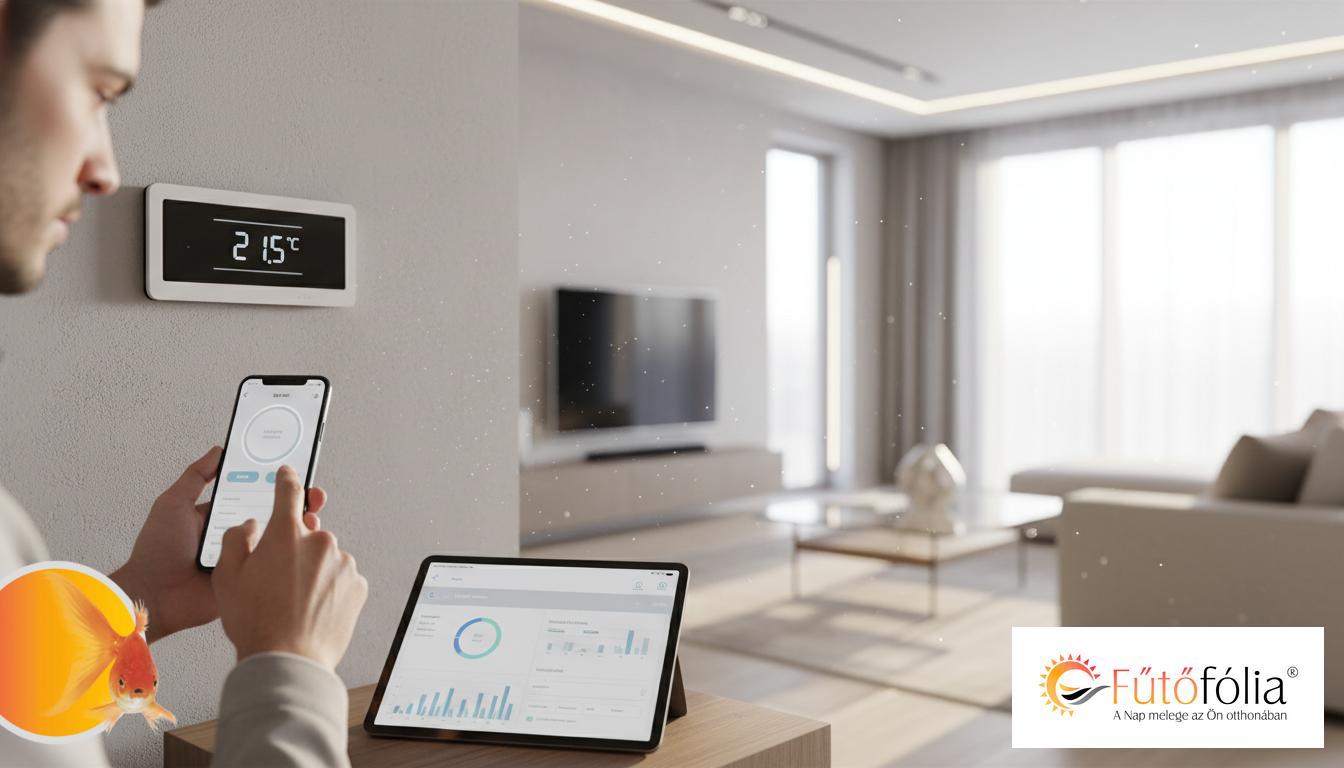
Setting up smart heating control step by step
Step 1: planning and preparation
Before buying any device, review the existing system:
- What is your heating? Water-based (radiators or water-based underfloor heating), or electric, for example infrared heating or heating film? How many heating circuits does it have, and what thermostat controls it now?
- Compatibility: not every smart thermostat works with every boiler or heating system. With electric heating, also make sure the controller can handle the power of the heating and suits the given heater, for example a heating mat.
- Wi-Fi: most smart systems need a stable wireless network. Check the signal strength where you intend to put the controllers.
- Zones: decide which rooms you want to control separately – this determines how many room thermostats or radiator heads are needed.
Step 2: choosing the system
Smart heating control is typically made up of the elements below; which one you need depends on the heating and the number of zones:
- Smart thermostat: it goes in place of the existing thermostat and switches the heating. We described the differences between simple, programmable and Wi-Fi types in our article on room thermostats.
- Smart radiator valve (radiator head): with radiator heating it allows separate control for each radiator.
- Central unit (gateway, hub): in some systems this connects the smart devices to the home network and the internet.
- A complete smart-home system: besides heating it also manages lighting or security devices, and can include heating control as well.
Step 3: installation
The course of the installation depends on the chosen device.
Replacing a conventional thermostat:
- First and most important: switch off the power supply of the heating system before touching the thermostat.
- Before removing the old thermostat, note down and photograph how the wires are connected.
- Connect the new smart thermostat exactly according to the manufacturer's instructions. If wiring or connecting a relay is also needed, leave it to a professional.
- With some systems an additional unit that communicates with the thermostat also has to be connected to the boiler.
Smart radiator head: the old thermostatic head has to be unscrewed and the smart head screwed on in its place. No professional is needed for this, and the power does not have to be switched off.
Controlling electric heating: for heating film, heating cable or infrared panels you need a smart thermostat that can handle the higher current. These are generally wired in built into the wall; leave the wiring to an electrician. With infrared underfloor heating, the thermostat measures the floor temperature as well as the air – our separate video guide covers setting up the floor sensor.
Step 4: software setup and calibration
- App: download the manufacturer's smartphone app.
- Pairing: following the app's instructions, connect the thermostat or thermostats, the radiator heads and the central unit to the Wi-Fi network.
- Calibration: with a conventional thermostat or a reliable thermometer, measure the actual temperature of the room, compare it with the value measured by the smart system, and correct the difference. The calibration of our heating film thermostats is shown in a separate article.
- Weekly programme: set the schedule for times of day and days of the week according to when you are home, when you are at work and when you sleep. For example, you can turn the living room heating down while you are at work and switch it back up before you arrive home.
- Zones: if you have installed several thermostats or radiator heads, assign them to zones in the app so that you can set the temperature separately for each room.
Step 5: fine-tuning
The first setting is not yet the final one: after a few weeks of use the system truly adapts to the rooms and the daily routine.
- Weather adaptation: if the system can modify the heating on the basis of the forecast, switch this function on.
- Geofencing: on the basis of your phone's position, it turns the temperature down when you leave home and heats back up as you approach.
- Open window detection: some systems temporarily stop the heating during ventilation, so they do not heat unnecessarily.
- Learning function: after a few weeks many smart thermostats learn the thermal inertia of the building – how long it takes to warm up and cool down – and time the start of heating accordingly.
- Energy monitoring: if the app shows consumption, you can see from it where further savings can be made.
- Linking with other devices: if you also have an air conditioner or terrace heating, see whether it can be connected to the same system – this way cooling and outdoor heating can also be scheduled from one place.
- Special consumers: seedling heating in a conservatory or the heating of a hobby room can also be brought into the smart-home system with a smart socket if its consumption is significant.
What else should you watch for?
- Security and privacy: choose a reliable manufacturer and a system that complies with data protection requirements. If the question of electrosmog also concerns you, we present our own measurements on infrared heating on a separate page.
- Updates: keep the app and the devices' firmware up to date – this way you get new functions and security fixes.
- Patience: finding the optimal operation takes time. Watch consumption and comfort, and adjust the settings little by little.
Summary
Smart heating control depends on careful planning and patient fine-tuning. If the controller suits the heating, the zones suit how the house is used, and the programme suits the daily routine, the system will be more convenient and can reduce the heating bill – by how much depends on the starting point. Where the saving comes from, and when it can be greater, we explain in our article on modern heating control.
Request a quote — installation anywhere in Hungary
We survey, design and install heating film and infrared heating throughout Hungary. Tell us about your home and we will get back to you.