

Smart Heating Control for the Home
Author: Tóth Tamás · 5 min read
What smart heating control can do, what it consists of, what its benefits are and how to choose - with a realistic size of saving and why zoning is simpler with electric heating.
Smart heating control is a networked control system that, besides the set time programme, also takes into account the outdoor and room temperature, the time of day, with some types the presence of residents and an open window, so there is less unnecessary heating. It really pays off if your daily routine varies, you want a different temperature in each room, or you would like to manage your heating remotely too.
Because of fluctuating energy prices and environmental awareness, many people today are looking for ways to heat more precisely. In this article we look at what a smart system can do, what benefits it brings and what to base your choice on. If you have already decided, the installation and setup process is described in our step-by-step guide.
What is smart heating control?
A conventional, manual or simply programmable thermostat switches according to a set value or time. The elements of a smart system, however, communicate with each other and with the user, and take several signals into account: the outdoor temperature, the current temperature of the room, the time of day, even the presence of residents. More advanced systems "learn" habits during use and adapt the heating cycles to them, so that comfort is maintained while energy use falls.
What does it consist of?
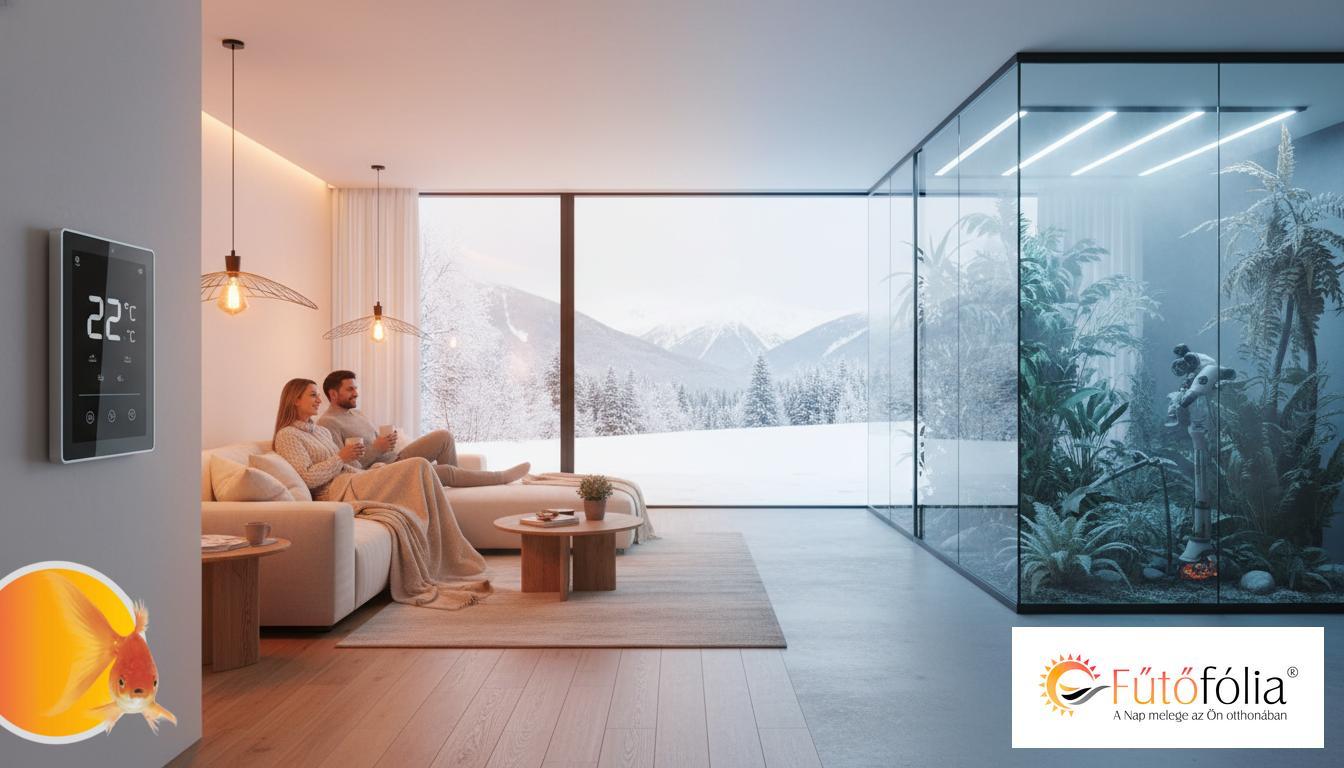
- Smart thermostat: the centre of the system. It measures the temperature, connects to the other devices and the internet over wifi, and can be managed from a smartphone or tablet; many types have a display and touch buttons.
- Zone-by-zone control: with radiator heating, smart radiator valves let the temperature of each room be regulated separately - a rarely used guest room does not need to be heated in the same way as the living room.
- Sensors: outdoor temperature, humidity, an open window or door (in which case heating can stop in that zone), and with some systems a motion sensor to detect presence.
- Smart home connection: many systems can be linked with the major smart home platforms, so they can also be managed with voice control and automatic scenarios.
With electric heating, zones are already built in
Electric heating - for example infrared heating, heating film or an infrared panel - goes on a separate circuit for each room and mostly has its own thermostat, so radiator heads are not needed: the zones come into being together with the installation. With infrared underfloor heating, the thermostat monitors the floor temperature as well as the air. Which thermostat type is for what you can read in our article on room thermostats.
What are the benefits?
Comfort
- Remote control: from work or on holiday you can check and change the temperature at home, so you do not need to heat an empty home during the day, yet it welcomes you warm when you get back.
- Personalised programme: a different temperature can be set for each day of the week, and within it for each time of day.
- Learning operation: some systems adapt to habits - if, for example, you usually get up at 7, the home warms up pleasantly by then on its own.
Less energy
- It heats only where and when needed: if you use only a few rooms, the whole house does not have to be heated equally.
- Less waste: detecting open windows and presence, and more precise temperature control, hold back unnecessary energy use.
The size of the saving depends on the starting point: where the house was previously heated equally all day, it is larger; where a well-set programmable thermostat already worked, it is smaller. A good reference point is the 2022 recommendation of the International Energy Agency (IEA): according to it, lowering the thermostat by 1 °C reduces heating energy demand by about 7%. Smart control does this lowering automatically for the night and for the time you are away. The payback therefore depends on what the system costs and how much unnecessary heating it eliminates - the more wasteful the previous control was, the sooner. The sources of savings are laid out in detail in our article on modern heating control.
Safety
- Monitoring: the system watches the heating and, in case of an anomaly - for example if the temperature falls to a freezing level - can send a notification to your phone.
- Frost protection: it can be set so that below a critical temperature the heating switches on automatically, so the pipes do not freeze even in your absence.
- Remote checking: if the heating was left on before you travelled, you can turn it down remotely, avoiding unnecessary consumption and overheating.
Environment
Less energy used means lower carbon dioxide emissions, so more precise control benefits not only your wallet but the environment too.
How do you choose smart heating control?
- Compatibility: does it fit the existing heating - a gas boiler, electric heating, underfloor heating? With electric heating the thermostat must also be able to handle the heating's output.
- Functions: is remote control enough, or do you need full zone-by-zone control and learning operation?
- Installation: some devices - for example a radiator head - you can fit yourself, but leave wiring the thermostat to a professional, especially with electric heating.
- Usability: if you can, try the mobile app in advance; the interface should be clear and easy to use.
- Expandability: think of the future - would you later connect other smart home devices to the system?
- Cost: do not look only at the purchase price: a cheaper system can be more expensive in the long term if it saves less.
Smart heating control is not a technological novelty for its own sake, but a tool for making the heating adapt to how the house is actually used. Well chosen and set up, it gives a more comfortable, more economical and more environmentally friendly home.
Request a quote — installation anywhere in Hungary
We survey, design and install heating film and infrared heating throughout Hungary. Tell us about your home and we will get back to you.