

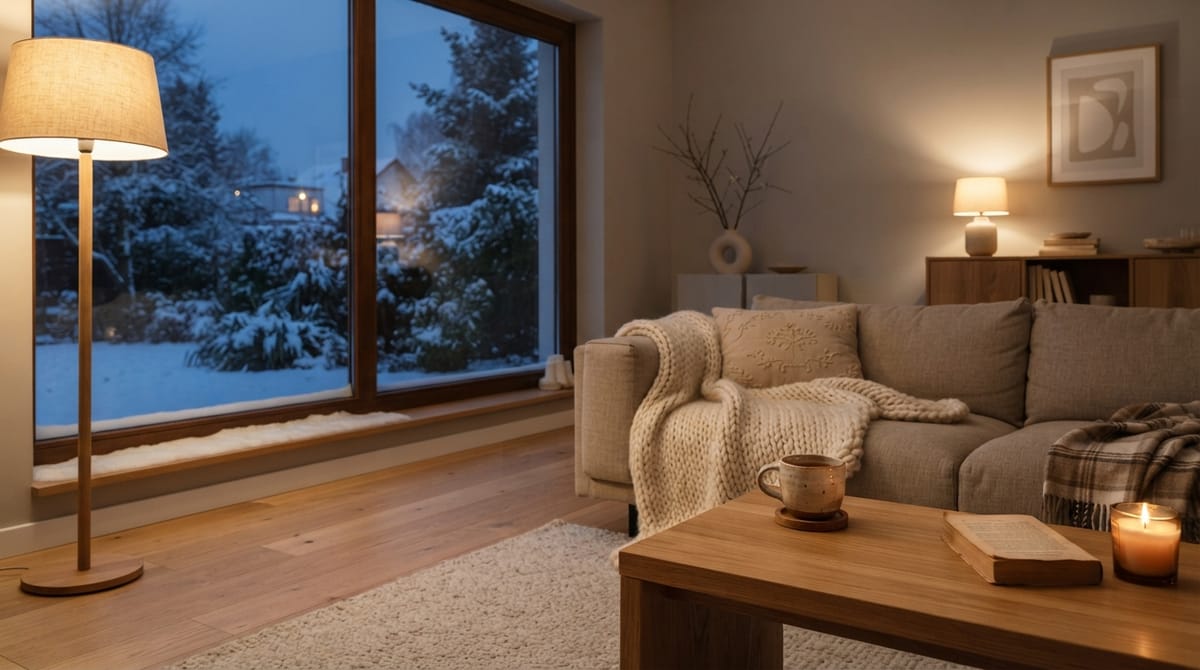
Electric heating: which type is for what?
There are five main solutions for electric heating: heating film in the floor, wall or ceiling, infrared panels, panel heaters, heating mats and heating cable. Which is right is decided not by the appliance but by the building: its heat loss, how the rooms are used and the floor covering.
In brief
- There are five main solutions for electric heating: heating film, infrared panels, panel heaters, heating mats and heating cable. All heat with electricity, but each suits something different.
- Heating film suits the invisible main heating of a whole home; infrared panels or panel heaters suit single rooms; heating mats suit a warm floor.
- Consumption is determined by the heat loss of the building, not by the type of appliance.
- With a thermostat in each room, heating runs only where and when it is needed.
- For every type, the fixed 230 V connection should be made by a qualified electrician.
Types of electric heating
All of them heat with electricity, yet each suits something different. Each card leads to the detailed page.
Heating film (infrared heating)
Thin heating film under the floor covering, in the wall or in the ceiling. It radiates from the surface and is invisible; we design and install it as the main heating for a whole home or house.
Részletek →Infrared panel
A radiant panel mounted on the wall or ceiling. It can be installed room by room as main or supplementary heating, with an output chosen for the volume of air.
Részletek →Panel heater
A wall-mounted electric heater that warms the air, commonly called a convector. With a built-in thermostat, also in a protected version for bathrooms.
Részletek →Heating mat
Thin heating cable fixed to a mesh, under the floor covering. A warm floor in bathrooms and kitchens, also in renovations.
Részletek →Heating cable
Underfloor heating built into screed, frost protection of pipes and gutters, de-icing of paving and driveways.
Részletek →Thermostat
This is what makes any of them economical: it measures and switches room by room. Heating under a floor covering needs a floor-sensor type.
Részletek →Which electric heating is for what?
The table compares how the types work and where they are typically used. The output you need and the cost must always be calculated for the building in question.
| Heating film | Infrared panel | Panel heater | Heating mat | Heating cable | |
|---|---|---|---|---|---|
| How does it heat? | Radiates from the surface | The surface of the panel radiates | Warms the air (convection) | Warms the floor covering, which gives off the heat | Warms the concrete layer, pipe or floor covering |
| Where does it go? | In the floor, wall or ceiling, behind the covering | On the wall or ceiling; a version for mounting under a desk is available | On a vertical wall, 10–20 cm above the floor, ideally under a window | Into tile adhesive or self-levelling compound, under the floor covering | Into screed, on pipes, in gutters, under paving or asphalt |
| What is it best for? | Invisible main heating for a whole home or house | Room-by-room heating, bathroom, office, supplementary heating | A less-used room, quick supplementary heating | A warm floor in the bathroom or kitchen | Underfloor heating when building; frost protection and de-icing |
| Is it visible? | No | Yes: white, glass or mirror finish | Yes | No | No |
| Installation | Design and professional installation | Bracket by yourself; fixed connection by an electrician; plug-in package available | Bracket by yourself; 230 V connection by an electrician | Laid by the tiler, connected by an electrician | Laid by the installer, connected by an electrician |
| Control | Thermostat in each room | Separate or built-in thermostat, WiFi version | Built-in thermostat, WiFi depending on the model | Thermostat with a floor sensor | Thermostat; sensor control outdoors |
Sources: manufacturers' data sheets and installation guides on the product pages of the web shop; placement of the panel heater according to the NordArt distributor information.
Six questions that show what suits you
These are the questions we ask at the on-site survey too, so it is worth thinking them through in advance.
- 1
Permanent or occasional use?
A home lived in all year round needs something different from a holiday home or a rarely used room.
- 2
How large is the area to heat?
Supplementing one room and providing the main heating for a whole house call for different solutions and different investment.
- 3
Will it be main or supplementary heating?
For supplementary heating one panel or one heating mat is often enough. For main heating you must start from the heat demand of the whole building.
- 4
What are the insulation and the windows like?
Consumption is determined by the heat loss of the building. It is worth looking first at what can be improved.
- 5
What will the floor covering be?
Under tiles, laminate or parquet, a different solution and a different output are right, and heating can also be built into the wall or ceiling.
- 6
Can the electrical installation cope?
With several heaters or all-electric heating, an electrician checks the connection capacity and the circuits.
How much does electric heating cost?
It is worth looking at two figures separately: the investment (equipment, materials, installation) and the running cost (electricity consumption).
Consumption is decided not by the installed output but by how much heat the building loses: any electric heating replaces that amount of heat with electricity. The difference comes from the control: how precisely the system heats, room by room and on a schedule.
For an estimate use our calculators: electric heating calculator, heating film consumption, infrared panel consumption, panel heater consumption. We give the exact figure, with an itemised quote and the expected annual running cost, after the on-site survey.
We have worked with heating film since 2012
Fűtőfólia (futofolia.hu) is a brand of Toma Family Mobil Kft. Since 2012 we have been designing and installing infrared heating film in floors, walls and ceilings; so far we have carried out more than 5,000 installations. Our founder, Tamás Tóth, is the president of the Hungarian National Electric Heating Association (MOEFSZ).
The web shop also carries the other electric heating solutions (infrared panels, panel heaters, heating mats, heating cable and thermostats), so you can compare them in one place. Installation is available in Hungary.
A 15.5-year warranty on 4th-generation heating film when we do the installation.
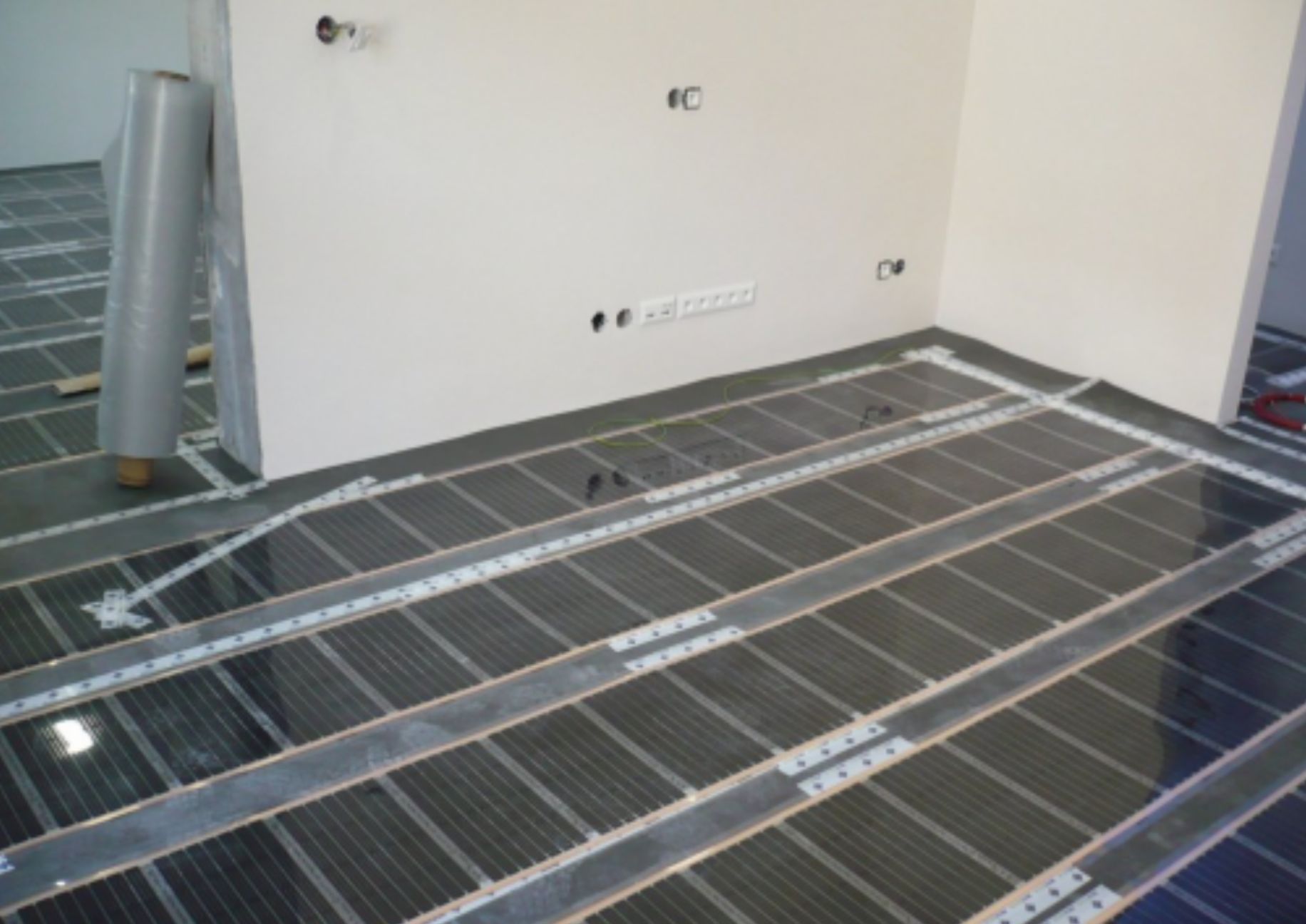
Electric heating in the web shop
Our (Hungarian-language, delivery within Hungary) web shop has these categories: heating film, infrared panels, panel heaters, heating mats, heating cable and thermostats.
Questions about electric heating
Which electric heating should I choose?
The type of electric heating is decided by the building and the job: for the invisible main heating of a whole home or house we recommend heating film, for single rooms infrared panels or panel heaters, for a warm floor under the covering heating mats, and for underfloor heating built into screed and for frost protection heating cable. The starting points for the decision are how the building is used, the area to heat, the insulation and the floor covering. Guides: infrared heating, infrared panels, panel heaters.
Which is the cheapest electric heating?
There is no single cheapest electric heating, because the price of the appliance, the installation labour and the running cost are distributed differently for each type. The running cost is determined by the heat loss of the building and the control, not by the type of appliance: any electric heating replaces the same amount of heat with electricity. For a whole home you therefore have to look at the investment and the running cost together. See: How much electricity does infrared heating use?
How much electricity does electric heating use?
Electric heating uses as much electricity as the heat the building loses, because the heating replaces that amount of heat. Consumption therefore depends on the insulation, the windows, the set temperature and room-by-room control; according to the design data of ten houses of our customers, with heating film it comes to 26–75 kWh of electricity per square metre per year. Estimate: electric heating calculator.
How much does electric heating cost?
The cost of electric heating must be split into two parts: the investment (equipment, materials, installation) and the running cost (electricity consumption). For a heating film system in 2026 the investment is HUF 11,250–18,000 per m² of floor area to be heated, gross, including installation; in September 2026 electricity in Hungary costs HUF 36.4/kWh up to 2,523 kWh per year and HUF 70.1/kWh above that. We give the exact figure after the on-site survey. Estimate: electric heating calculator.
Is electric heating suitable as main heating?
Electric heating is also suitable as main heating if the installed output is sized to the heat demand of the building and the heating is controlled room by room. For the main heating of a whole home or house we design and install heating film; infrared panels can be main or supplementary heating room by room. The sizing must be done from the data of the building, which is why we recommend an on-site survey for main heating: on-site survey.
Do I need an electrician for electric heating?
For every type, the fixed 230 V connection should be made by a qualified electrician; with several heaters or all-electric heating he also checks the connection capacity and the circuits. There are plug-in versions, for example an infrared panel with a WiFi socket thermostat, and the wall brackets of panels can be fitted yourself. Plug-in version: infrared panel.
What does the 15.5-year warranty cover?
A 15.5-year warranty applies to 4th-generation heating film when we do the installation. For the other electric heating products bought in the web shop (infrared panels, panel heaters, heating mats, heating cable and thermostats), the product's own warranty applies. The warranty starts on the day of commissioning. The film: 4th-generation heating film.
Request a quote — installation anywhere in Hungary
We survey, design and install heating film and infrared heating throughout Hungary. Tell us about your home and we will get back to you.
Sources
- Fűtőfólia — company profile (since 2012, installations)
- Hungarian National Electric Heating Association (MOEFSZ)
- Manufacturers' data sheets and installation guides on the product pages of the web shop (Fenix EcoSun, Adax, Glamox, LIKEWARM, T-Mat) (September 2026)
- NordArt panel heater distributor information (from the earlier /futopanel/ page of futofolia.hu) (2024)