

Which Thermostat / Room Thermostat Is the Right One?
Author: Tóth Tamás · 5 min read
A simple, programmable or wifi smart thermostat? What the three types can do, why infrared heating has a floor sensor and an air sensor, where to mount the thermostat, and which setting mistakes needlessly raise your heating bill.
The right thermostat is the one that suits the heating and your daily routine. Infrared heating needs a two-sensor thermostat that monitors both the air and the floor temperature. A simple room thermostat only holds the set value, a programmable one switches according to a daily or weekly programme, and a wifi smart thermostat can also be set from your phone. The more expensive programmable and smart types pay off in the long run, because they let you avoid overheating.
What is a room thermostat for?
A thermostat is a small device mounted on the wall of the room, which switches the heating on and off based on the measured temperature, so that the desired temperature develops in the room. The thermostats used with infrared heating work with 2 sensors: one monitors the air temperature, the other the floor temperature. The two sensors together give the most comfortable result, and also protect the floor from overheating. We write about setting the floor sensor in a separate article: setting the floor sensor of a digital thermostat.
The three thermostat types
Simple room thermostat
The simplest solution: it is not programmable, it only holds the set value. It can be analogue or digital; it works the same way. Its disadvantage is that every change has to be made by hand. If in a morning rush you forget to turn it down, it holds the set temperature all day in an empty home; and if you do turn it down, a cooler home welcomes you when you arrive. A good choice, but not the most convenient.
Programmable thermostat
It stores daily or weekly programmes, so the temperature can be adapted to the daily routine of the people living or working in the building. It is worth lowering the temperature about 15 minutes before leaving: the thermal feel stays the same, but energy can be saved. It also works the other way round: with heating that starts 15 minutes before the planned arrival, you get home to a pleasant temperature.
Smart, wifi thermostat
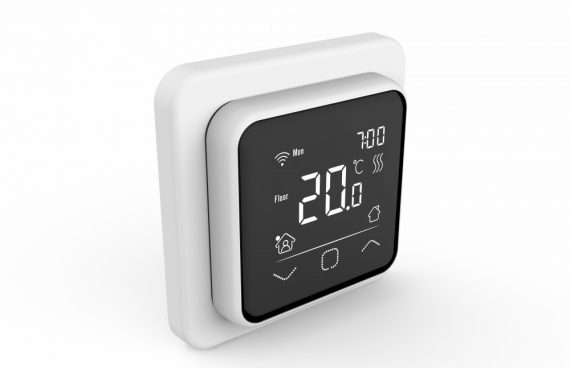 A wifi thermostat can also be managed from a phone app. It is especially useful if your routine varies: if you get home earlier or later than planned, you simply change the setting, and the desired temperature is waiting. The programmable and smart versions cost more than the manual one, but pay off in the long run because you do not overheat your home.
Thermostats and accessories from our webshop
You will find the current price and availability on the product pages (Hungarian-language shop, delivery within Hungary).
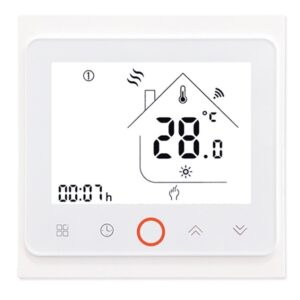 Room thermostat in white B002
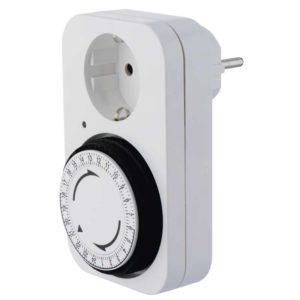 Mechanical timer switch 1gd/2a
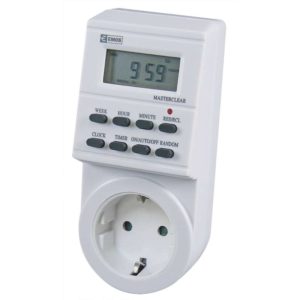 Digital timer switch ts-ed1
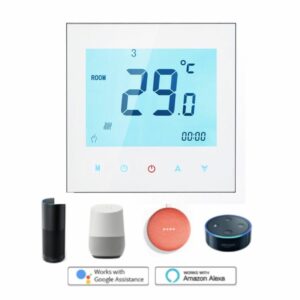 Premium Wifi - glass thermostat in white B1000
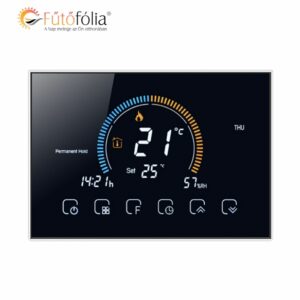 Luxury WIFI thermostat in black B8000
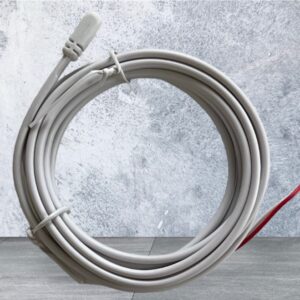 Thermostat floor sensor
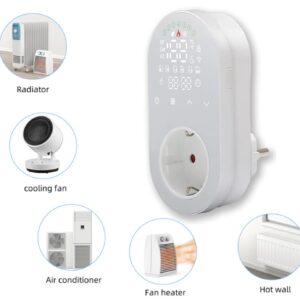 Programmable BHT-12E-WiFi plug-in thermostat - socket thermostat 16A
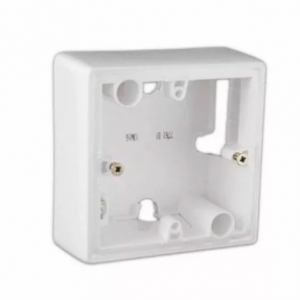 M1, M6, M9 room thermostat surface-mount frame
Where should it go? Where should it not?
The thermostat must be installed where it senses the room's true temperature. It should not go:
- near a heater;
- next to a door or window;
- next to an oven, hob or fridge;
- on a wall surface that receives direct sunlight.
A good place is where you spend most of the day, or the coldest point of the home: if the set temperature is reached there, it will be adequate in the other rooms too. If the thermostat is too close to a heater, it does not switch on even when it should; if it is next to the front door, it heats even when there is no need.
Common setting mistakes
Even the best thermostat brings no saving if it is used badly.
One thermostat for the whole home
A common cause of overheating is that a single thermostat controls the heating of every room. If one room is colder, the others have to be too warm for it to be pleasant there as well. With room-by-room control this can be avoided; it is worth setting the heating of an unused room to a low level and closing its door.
A turned-up thermostat does not heat faster
A common myth is that with the thermostat turned up the home warms up faster. The heating works at the same pace, it just does not stop at the comfortable temperature but at the higher value - the result is a needlessly overheated home.
Always the same temperature
There is little point in holding the same temperature even when nobody is home. Pleasant warmth on arrival can also be ensured with a programmable thermostat.
Switching off completely every time you leave
Switching the heating off completely every time you leave is not a good solution either: frozen-through walls are much harder to warm up again afterwards, and frequent alternation of cold and warmth encourages mould. This is true of electric heating too. Radiant infrared heating also warms the wall surfaces, which helps against surface condensation, but preventing mould also needs regular ventilation and a moderate, even temperature. We write about when it pays to turn the heating down or off in our article on switching the heating off.
A sweater is a thermostat too
In winter nobody wants to feel the cold outdoors inside, but you do not need to keep it shorts-warm. In a sweater or tracksuit the same temperature feels a few degrees warmer - so the home is not overheated, and the heating bill does not rise needlessly. You can read about calibrating the B1000 thermostat to the real temperature in our thermostat calibration article.
More interesting articles
Request a quote — installation anywhere in Hungary
We survey, design and install heating film and infrared heating throughout Hungary. Tell us about your home and we will get back to you.