

Give Your Heating Bill a Slap – Solar Panel Prices in Reality
Author: Tóth Tamás · 7 min read
What does the price and size of solar panels depend on if you plan them together with electric heating? Consumers in a new and an existing house, the effect of an electric car, why an on-site survey is needed, financing, and practical tips.
The price and size of solar panels depend first of all on how much electricity the house will use – and in this, electric heating is often the biggest item. That is why it is worth sizing solar panels together with the planned heating, cooling, hot water production and any electric car, and the site must also be seen before a quote. Below we list the considerations based on our experience from heating surveys. We do not undertake solar surveys or installation — the system is designed and built by a solar installer.
We come across the wish to plan electric heating and solar panels together almost every day. When the article was published in 2020, many solar grants were available to private individuals and businesses; subsidies have changed since, and our article on the residential energy storage grant gives an idea of a newer programme.
Solar panels when building new, or retrofitted?
A solar investment in a family house can come up at any time: right at the design stage, or when modernising an existing house later. The two situations have to be calculated differently.
New house: start from the expected consumers
When building new there is no electricity bill yet and no measured experience, so the expected electrical consumers have to be assessed. The size and price of the solar panels depend on these:
- Heating system. It matters whether infrared heating or another electric heating is being built (panel heater, heating mat, heating cable, infrared panel, towel warmer). In our experience infrared heating needs less electricity, so fewer solar panels may be enough for it.
- Control. Is the heating regulated by a thermostat or a smart home system?
- Cooling. Will there be an air conditioner or another cooling system?
- Household appliances. Fridge, water heater, cooker, oven – the number and the output also count.
- Lighting. It is worth planning with low-consumption LED lighting.
- Electric car. Will a car charger be built, and will it be used?
Existing house: we start from the electricity bill
With a retrofit we start from a better position, because there is measured data. The first step is reading the annual consumption from the electricity bill, the second is assessing the expected changes with the expert. A well-prepared solar expert asks not only about the current bill but also about these:
- What will the electrical consumers be extended with?
- What do you heat with now? Older houses mostly have gas or mixed-fuel heating, and with a solar investment the question often arises of switching the heating partly or fully to electric. Lower-energy-demand infrared heating may be suitable for this: as floor or ceiling heating, or as a supplement to the existing system.
- Will there be an air conditioner? Solar panels produce the most in summer, so they can largely cover the electricity of cooling too. Because of warming summers, cooling is an increasing item on the electricity bill, so it must be counted in.
- How is hot water produced? In older houses a gas or electric water heater is typical. Replacing an old gas water heater with a modern electric one reduces gas consumption but increases the house's electricity demand – this must also be counted in the sizing of the solar panels.
- Is there or will there be an electric or hybrid car? More on this below.
How much does an electric car increase the solar demand?

When the article was published, average car use in Hungary was about 10,000 km a year. If this is replaced entirely with an electric car, depending on the model, an additional consumption of roughly 1,300–2,000 kWh a year has to be counted, and the solar system must be designed correspondingly larger. The table below shows the consumption of models on the market when the article was published:
| Electric car | Consumption per 100 km |
|---|---|
| VW e-Golf | 12.7 kWh |
| VW e-Up | 11.7 kWh |
| Nissan Leaf | 15 kWh |
| BMW i3 | 12.6 kWh |
| Tesla S | 22 kWh |
So an e-Golf uses 12.7 kWh per 100 km, and a Tesla S 22 kWh. In experience, with solar panels the car is also used more, because electricity from your own production feels almost free – it is worth calculating this expected increase in advance too.
Why is an on-site survey important?
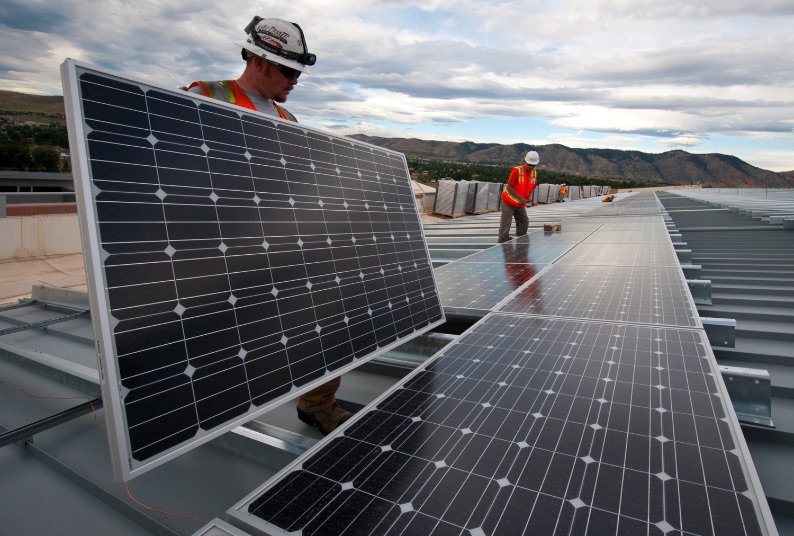
A preliminary quote can also be given remotely: on a satellite image you can see which roof surface has a suitable orientation, and by phone or e-mail the electricity bill and the planned changes can be requested. For an exact plan and price, however, the site must also be seen, because the type and amount of several materials can only be assessed there:
- How far apart will the panels and the inverter be?
- Which way and for what length can cables be run aesthetically and properly on the building? Over a greater distance a thicker cable is needed, and the cross-section also influences the price of the system.
- Where is the grid connection point relative to the inverter?
- What mounting structure suits the roof? This depends on the material and condition of the receiving surface, and there can be even a threefold difference in the material price of the mounting structure.
- At a personal meeting, questions arising during the investment can also be cleared up quickly, which saves many phone calls and e-mails.
When requesting a quote, therefore, ask whether the installer visited the site or calculated only from remote data. If you would like to plan the system together with heating, request an on-site survey (available in Hungary).
How can solar panels be financed?
The options: own capital, partly non-repayable grants, or preferential loans. When the article was published in 2020, grants in Hungary were mainly for companies, businesses and the development of rural farmsteads, and private individuals could use a 0% energy efficiency loan – for heating modernisation, insulation, window replacement and renewable energy sources (solar panels, solar collectors, heat pumps), among others. These are the 2020 conditions; whether a programme is available today and on what terms must always be checked on the website of the provider.
Think ahead about consumption
Do not size the solar system only for current consumption: habits change, and it is worth preparing for this at the design stage. A common experience is that after installation electricity consumption jumps, because with your own production we pay less attention to consumers: we do not switch off lights automatically, new appliances come into the home. With the annual settlement typical when the article was published, this became clear on the bill after 1 year – often with the amount payable hardly any smaller.
For new systems in Hungary, gross metering has applied since 1 January 2024: electricity fed into the grid and electricity drawn from it are settled separately. That is why it matters especially today that as large a part of the electricity as possible is consumed when the solar panels are producing.
How much electricity can infrared heating need? Two examples
The electricity demand of heating is determined by the energy need of the building, which, however, most owners do not know. The figure below shows two examples: the expected annual consumption of a well-insulated house being built now and an older, averagely insulated one. The heating of the older house needs significantly more electricity, so a larger solar system would be needed for it.
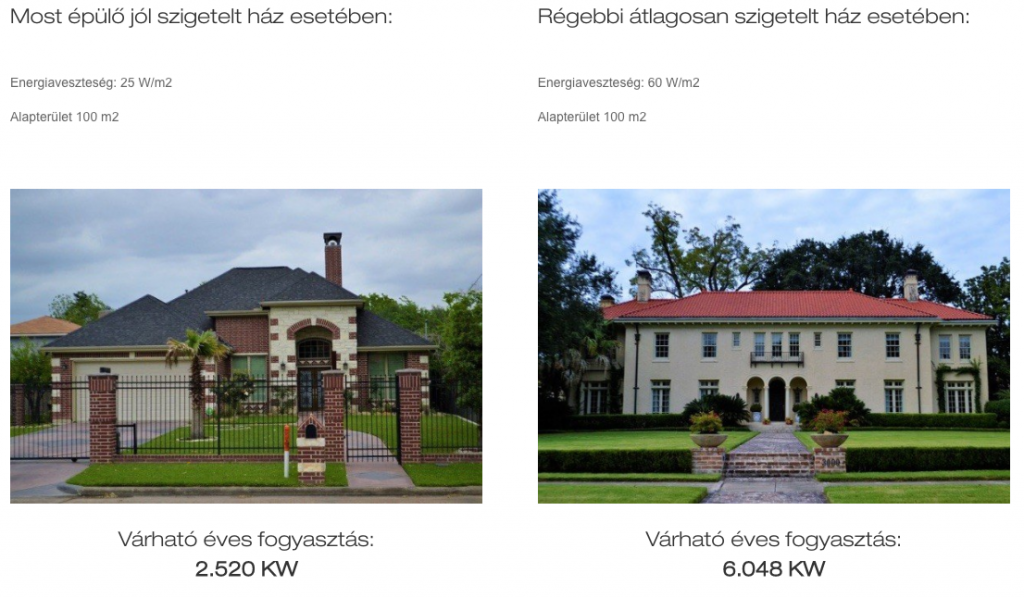
The examples are indicative; every property is different, and the exact value must be calculated from the data of the house. How much of this solar panels can replace is shown in our analysis of the myths and real savings of solar heating.
What to watch for with solar quotes
- Plan the system optimally, somewhat larger than current consumption.
- Choose an inverter with a higher output than the total output of the panels, so that you can extend the system later. Our expert regularly meets customers who would like to extend their existing system, but the previously installed inverter does not allow it.
- Contract a company that has seen the site of the investment – this way you can avoid unexpected extra costs.
- You can also look at solar panels as an investment: it is worth comparing the electricity cost saved with what the sum of the investment would earn in another form.
More useful articles
Request a quote — installation anywhere in Hungary
We survey, design and install heating film and infrared heating throughout Hungary. Tell us about your home and we will get back to you.