

An ISOTEQ Low-Running-Cost House with Infrared Heating
Author: Tóth Tamás · 5 min read
The IsoteQ insulated formwork-block building system and its three 2020 sample designs with heating film, smart-home control and solar panels – and what heating a very well-insulated house means today under gross metering.
This 2020 article presented the IsoteQ insulated formwork-block building system and three sample designs with heating film heating, smart-home control and solar panels. Its essence is still valid: in a very well-insulated house the heat demand is small, so room-by-room controlled electric heating can run at a low running cost, and solar panels can reduce its electricity cost further. Even today, however, it cannot be promised that heating costs nothing.
What does the title mean today?
The expression in the title reflects the building trend of 2020: many investors wanted a house that costs almost nothing to run. This is a conscious, environmentally friendly approach, but solar metering has changed since then. For new household systems in Hungary, gross metering has applied since 1 January 2024 – feed-in and consumption cannot be netted against each other – and the old annual net balance can only be kept by systems applied for by September 2023 and switched on by 1 January 2026, for a maximum of 10 years. A realistic aim is therefore for the house's heat demand to be as small as possible, and for as much of the consumption as possible to fall at the time of your own production. The conditions are discussed in our article on the real savings of solar heating and on our solar panel page.
The IsoteQ building system
IsoteQ is a Hungarian-owned company; according to the manufacturer, when the article was published it was the first in the Central and Eastern European region to receive the "Product Suitable for Building Passive Houses" certification. The building blocks belong to the ICF (Insulating Concrete Forms) family: the insulated formwork blocks are stacked on site and then filled with concrete. The concrete provides the load-bearing capacity and the NEOPOR expanded polystyrene the thermal insulation, so when the wall is finished the insulation is in place too, and building is faster and needs less labour.
The manufacturer's demonstration video shows the production and the course of the build:
The building elements according to the manufacturer's 2020 data
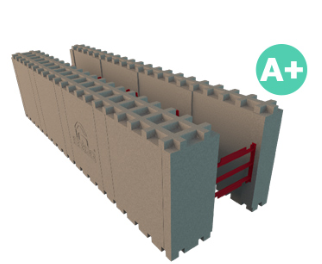
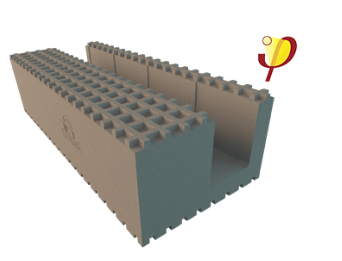
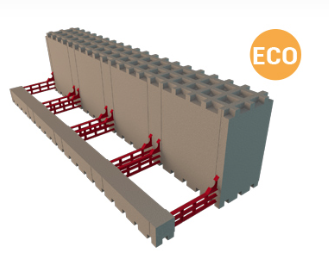
| Element | Size (mm) | Thermal transmittance (W/m²K) | External insulation | Weight / piece |
|---|---|---|---|---|
| IsoteQ PLUSZ wall block | 300 × 250 × 1000 | U = 0.18 | 10 cm | 956 g |
| IsoteQ PASSZÍV lintel block | 400 × 250 × 1000 | U = 0.11 | 20 cm | 1800 g |
| IsoteQ EXTRA ring-beam block | 350 × 250 × 1000 | U = 0.14 | 15 cm | 1090 g |
According to the manufacturer, the thermal transmittance of IsoteQ walls can be improved from U=0.26 W/m²K to U=0.11 W/m²K, which also makes building a passive house possible. As the interior finish, plaster or plasterboard is recommended, which gives a more pleasant microclimate than traditional lime-mortar plaster. The manufacturer also states that houses built with the system are more than 5 times stronger than those of conventional structure and better resist, for example, earthquakes; we quote this as the manufacturer's claim, and we have no tests of our own on it.
For the construction, the manufacturer highlighted ease of handling: no lifting or loading machine is needed to transport and move the elements. One bale means 5 m² of wall elements, which one person can move by hand; according to the manufacturer, moving 50 m², that is 10 bales of elements, takes one person about 5 minutes. Thanks to the light elements, the part of the wall above 1.5 m can also be built with little physical strain, even from a ladder.
Passive house and heating
According to the manufacturer's description, a passive house is a building that, thanks to the good thermal properties of its enclosing structures, needs only 20 percent of the average energy use and covers the rest with little external energy. In 2020 the article calculated that the roughly ten percent higher building cost pays back within a few years from the 80 percent lower running cost. Heating such a house needs little power, for which heating film built in behind the floor covering, controlled room by room, and smart-home control are a good fit.
The sample designs shown
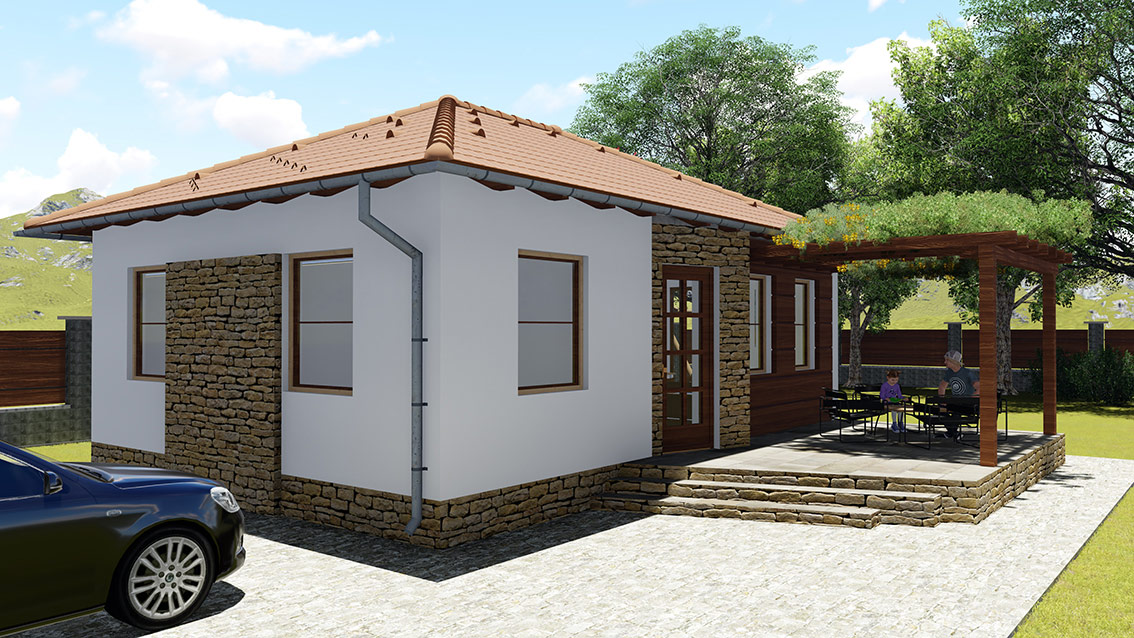
The article presented three IsoteQ sample designs, each with Intelligent Heating Film, smart-home control and a solar panel system. We have removed the 2020 net sample prices, because they no longer show real costs; the manufacturer's extended shell-construction technical specification from that time is still available.
IQ13
A single-storey house with 66.00 m² gross floor area and a 16 m² terrace; for this design we recommended a 7 kW solar system.
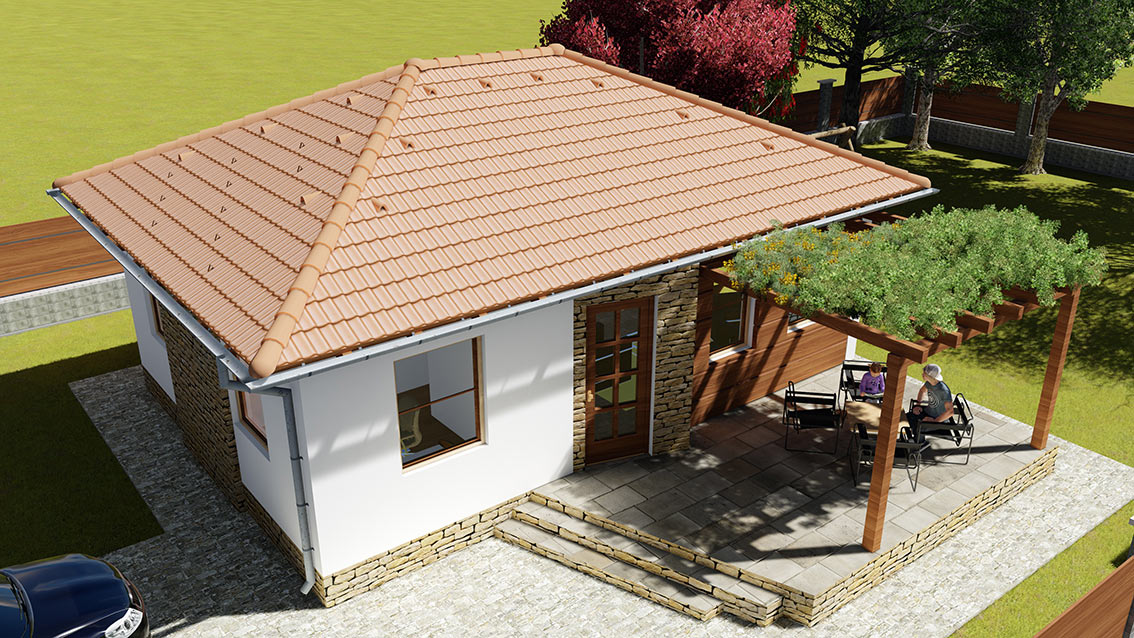
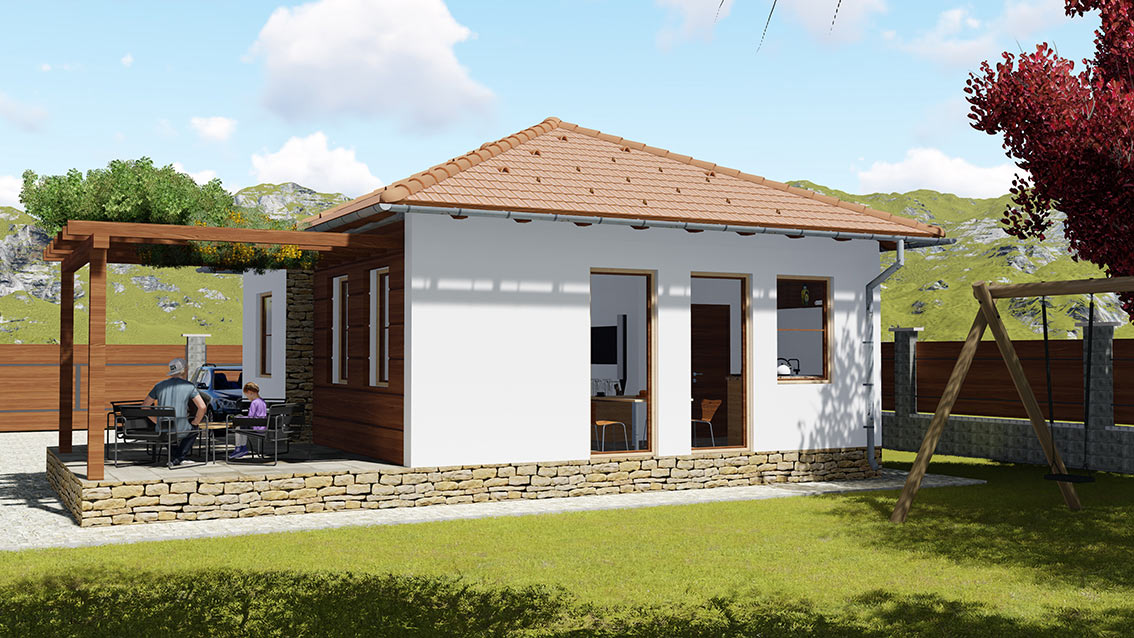
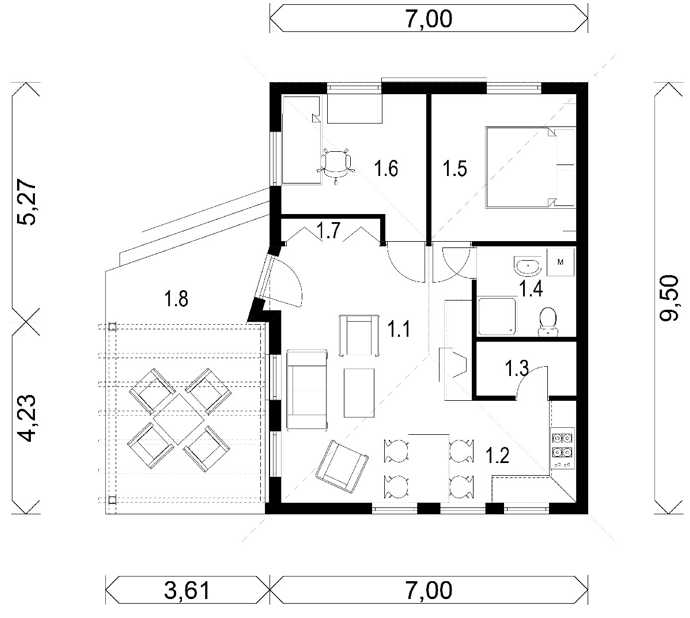
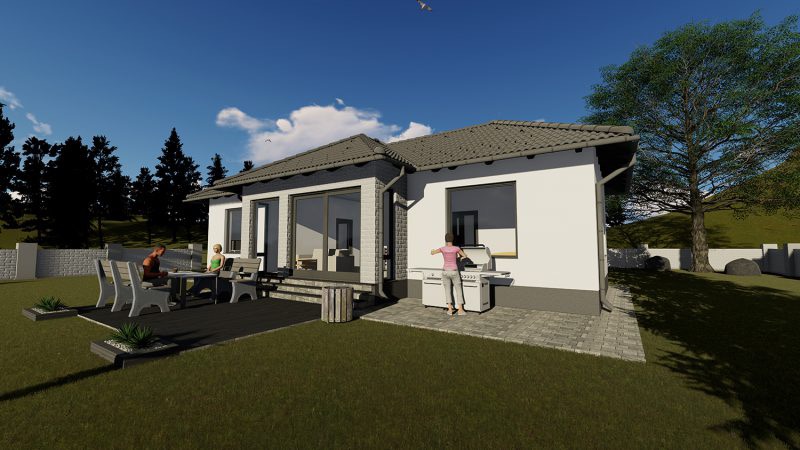
IQ159
A single-storey house with 97.70 m² gross floor area; for this design we recommended an 8 kW solar system.
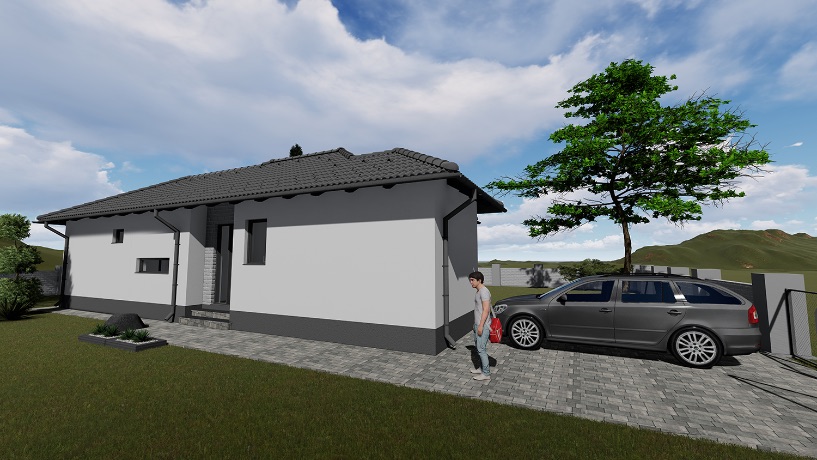
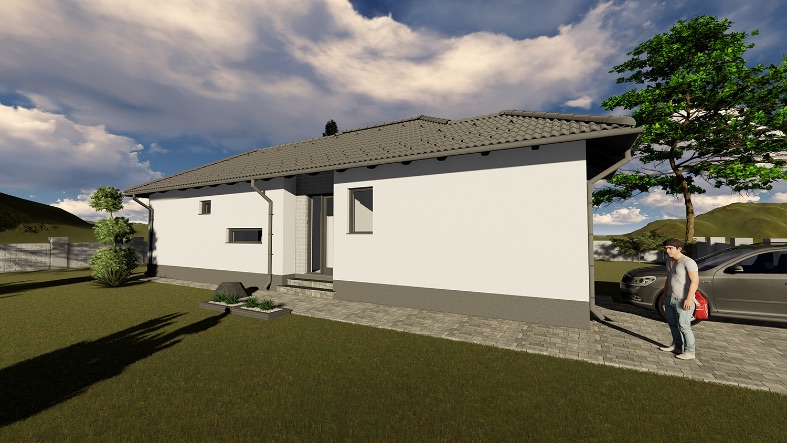
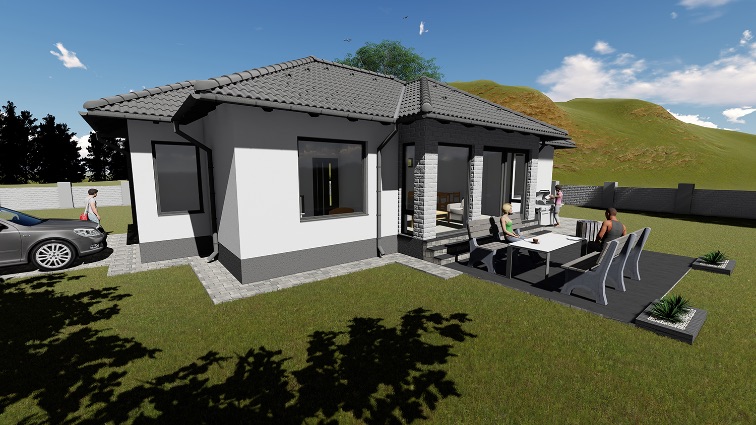
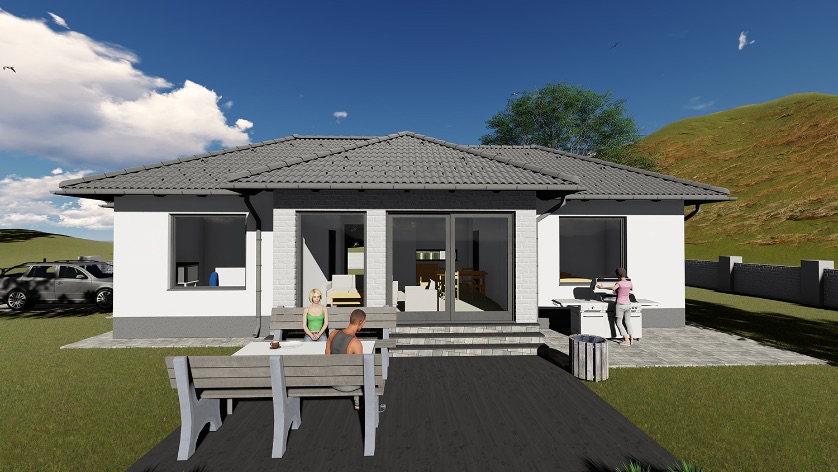
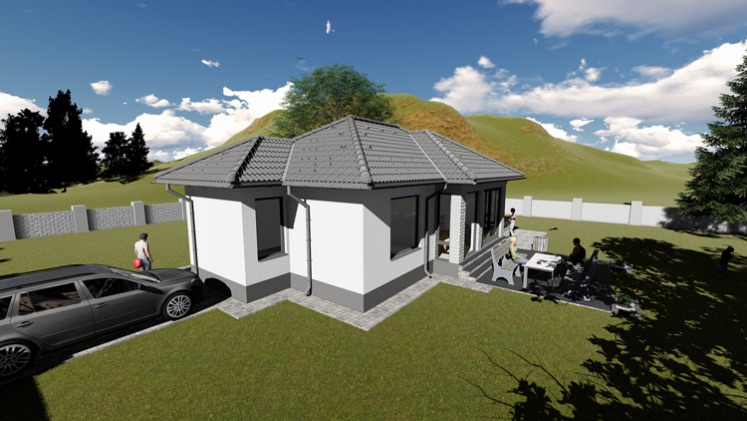
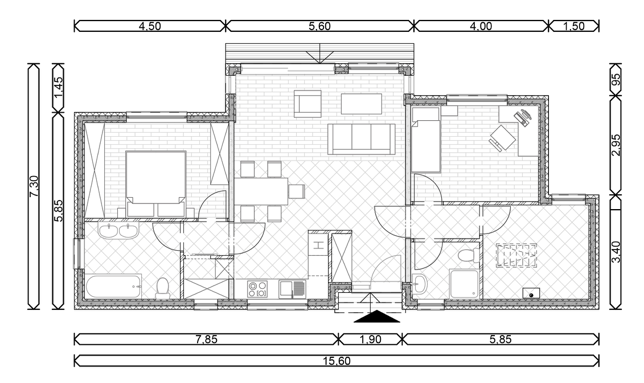
IQ122
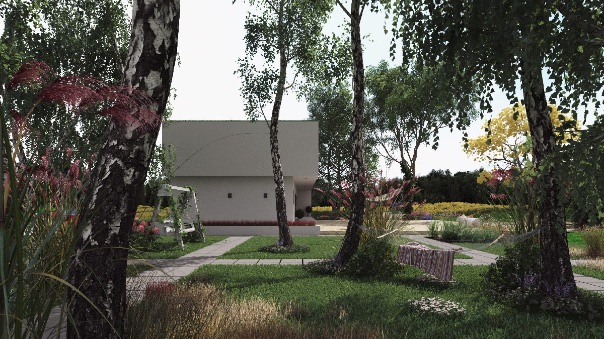
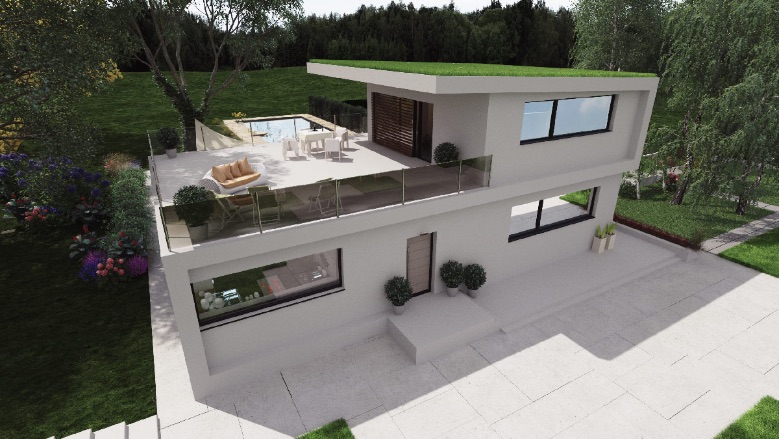
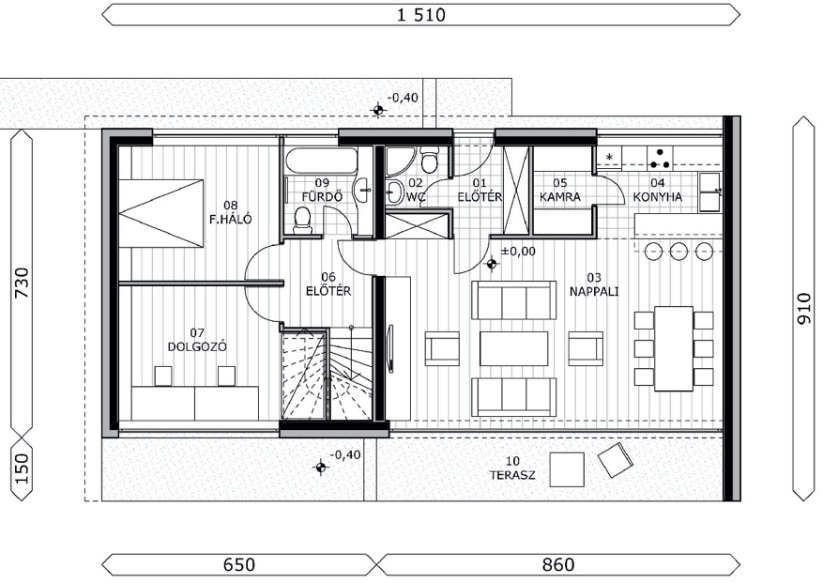
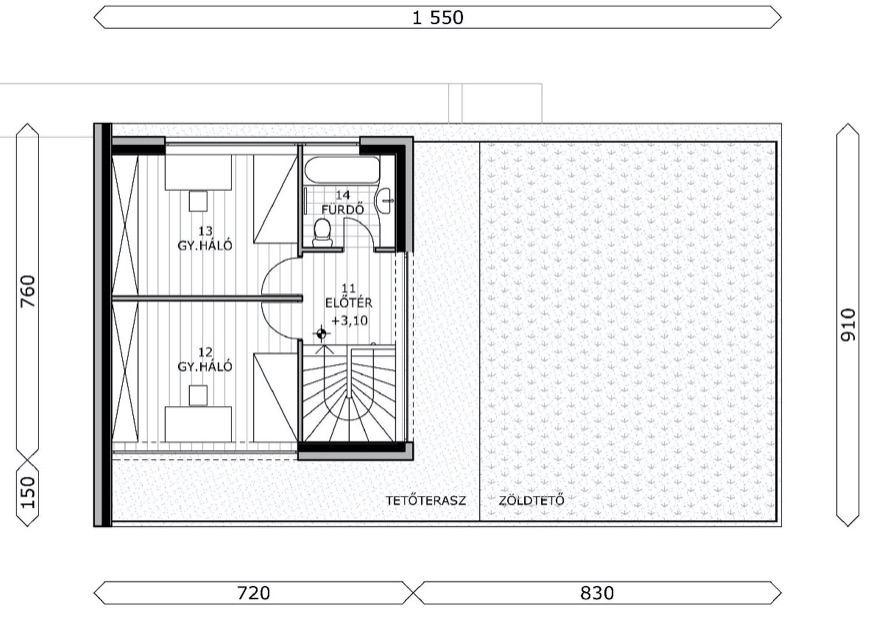
A two-storey house with 164.95 m² total gross floor area: the ground floor 110.23 m² with a 22.65 m² terrace, the upper floor 54.72 m² with an 86.33 m² roof terrace; for this design we recommended a 10 kW solar system.
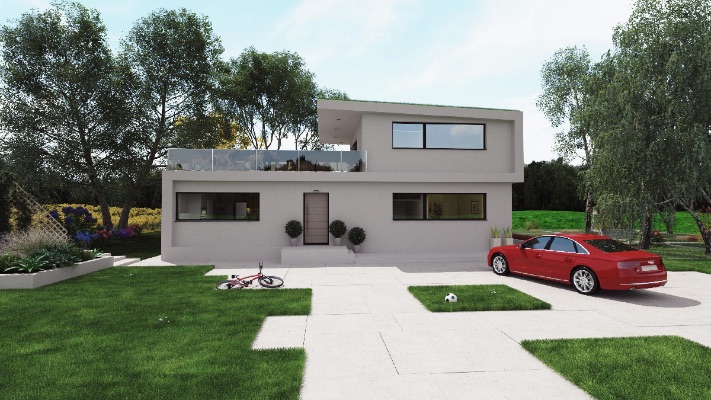
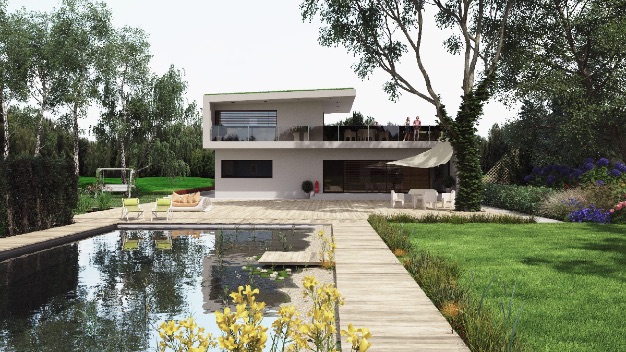
More designs can be seen on the manufacturer's sample designs page. The designs and visualisations are the property of IsoteQ GROUP and are protected by copyright. According to the manufacturer, the sample designs are not ready-made plans: they cannot be bought, and no exact installation quote can be made from them, which requires a permit or construction design and knowledge of the site.
Energy rating, cladding, roof
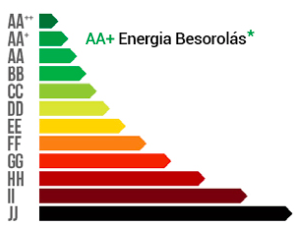
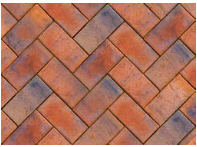

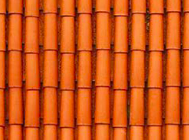
In 2020 the manufacturer also published the expected energy rating of the buildings; this was aligned with the regulations in force at the time. Building energy rules in Hungary have changed since then, so the energy certification of a specific house must be prepared under today's requirements.
Planning the heating for such a house
In a well-insulated, ICF-structure house, the power of the heating film can be matched to the small heat loss; the sizing criteria are covered in our article on the power of heating film. For a specific house we make a recommendation on the basis of the plans and the on-site survey (available in Hungary).
Request a quote — installation anywhere in Hungary
We survey, design and install heating film and infrared heating throughout Hungary. Tell us about your home and we will get back to you.