

What Should We Heat With? Gas Heating or Electric Heating?
Author: Tóth Tamás · 4 min read
Gas heating or electric heating when building and renovating: investment, maintenance, warranty, real efficiency, and the cases where electric heating - especially infrared heating - is the better choice, and when it is not.
When building or renovating, the better choice between gas heating and electric heating is the one that fits the heat demand of the building and the total cost. An electric system is cheaper and simpler to install and needs hardly any regular maintenance, but electricity is more expensive than gas per unit of heat. When replacing an old, low-efficiency gas system, in a house used only occasionally, or where there is no piped gas, electric heating is often more favourable.
Installing a gas boiler is costly, involves a lot of alterations, and definitely needs a professional. If during a renovation we replace convectors or mixed-fuel stoves, pipework has to be laid, radiators installed and a boiler purchased. Later the boiler and chimney need regular maintenance, and repairing a faulty thermostat or boiler is an extra cost. Fitting infrared panels is considerably simpler. If a panel goes into every room, that is no small investment either, but it costs far less than the full piping and connecting the radiators. In the decision it is worth weighing considerations that reach beyond the monthly energy bill.
Infrared panels from our webshop
The products below are examples of the panel solution; you will find the current price and availability on the product page (Hungarian-language shop, delivery within Hungary).
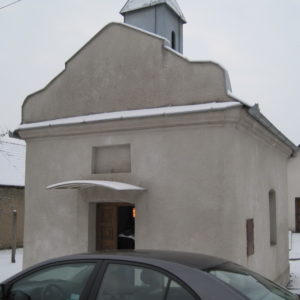 Church heating infrared panel 100CH 100W
- Church heating infrared panel 150CH 150W P
- Church heating infrared panel 200CH 200W
- Church heating infrared panel 270CH 270W
 Premium wifi smart infrared panels 1000 Watt
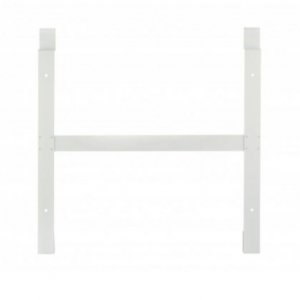 Ceiling mounting frame for premium wifi infrared panel
 Premium wifi smart infrared panels 700 Watt
Gas heating and electric heating, point by point
- Investment: installing electric heating is much cheaper.
- Upkeep and maintenance: with electric heating there is practically no regular maintenance cost, whereas with a gas system, inspecting and cleaning the boiler and chimney is a recurring item.
- Warranty: we give a 15.5-year warranty on 4th-generation heating film if we carry out the installation.
- Failure: electric heating has no combustion, pump or moving parts, so there are fewer wearing, failure-prone elements; professional wiring and the quality of the controls matter here too.
- Renewable energy: it can also be run from your own solar panels, which is a big advantage.
- Service life: an infrared panel has few wearing parts. A condensing boiler needs regular inspection and maintenance, and replacing it also has to be reckoned with over its lifetime.
- Carbon dioxide emissions: gas heating burns fossil fuel on site. Electric heating emits no combustion products on site; its indirect emissions depend on the source from which the electricity is generated, and with your own solar panels this can be reduced.
The cost of electric heating improves a lot if, together with the heating upgrade, we also have solar panels fitted on the roof. It also comes into consideration if a room or building is used only occasionally - typically a weekend house, where the system runs only when switched on and no continuous readiness is needed. It also serves well as supplementary heating, for example alongside a tiled stove or fireplace. Finally, necessity can also push you towards electric heating: if there is no piped gas in the area, or installing it would be disproportionately expensive.
What efficiency do gas heating and electric heating work with?
Modern electric heating converts electricity into heat with close to 100% efficiency, and can be supplied with renewable energy as well. The real, in-operation efficiency of an outdated wall-mounted gas convector, by contrast, is in our experience more like 30-35%, not as much as stated in its description for maximum load. It is like the manufacturer's fuel-consumption figure for cars, which we rarely reach in real use.
At the energy prices applicable when this article was published in 2020, it followed that the running cost of modern electric heating could be similar to or lower than that of an old convector working in the same conditions. If an old, oversized, badly controlled gas boiler system with, by our estimate, a real efficiency of 30-40% was replaced with modern electric heating, roughly the same energy bill could be expected, and with infrared heating even 15-20% lower. And if the whole system is being replaced, it pays better to install an electric system with a much smaller investment, and use the money left over to reduce the house's heat loss or install solar panels.
When is switching not worthwhile?
In a large-floor-area, high-ceilinged, outdated building it is not always worth installing electric heating that heats the air, because a huge volume of air has to be warmed. In such a case infrared heating film can be a good choice, because it primarily warms not the air but the surfaces and the people there. Our video report shows how infrared heating works in a building with a high ceiling height.
In larger, old, traditionally built houses conventional electric heating is not recommended either, because in thermal terms they come nowhere near today's expectations. For it to pay off there, it is not enough to replace the windows and doors and insulate the building from the outside.
If you are also considering a heat pump, our cost comparison of heat pumps and infrared heating helps with the comparison. You can request a technical proposal for heating film on our quote request page (installation is available in Hungary).
Request a quote — installation anywhere in Hungary
We survey, design and install heating film and infrared heating throughout Hungary. Tell us about your home and we will get back to you.