

The Secrets of Ceiling Heating: Comfortable, Invisible, Efficient
Author: Tóth Tamás · 4 min read
How ceiling heating works, how the water-based and electric versions differ, what the advantages are, what to watch for at the design stage, and when it beats underfloor heating or radiators.
Ceiling heating is a form of surface heating in which the heating element – either a water pipe or an electric heating film – is built into the ceiling and releases heat as infrared radiation to the walls, floor, furniture and people in the room. It is invisible, takes up no space, and is a good choice for a new house, a full renovation, or any home where heating cannot go under the floor.
What is ceiling heating?
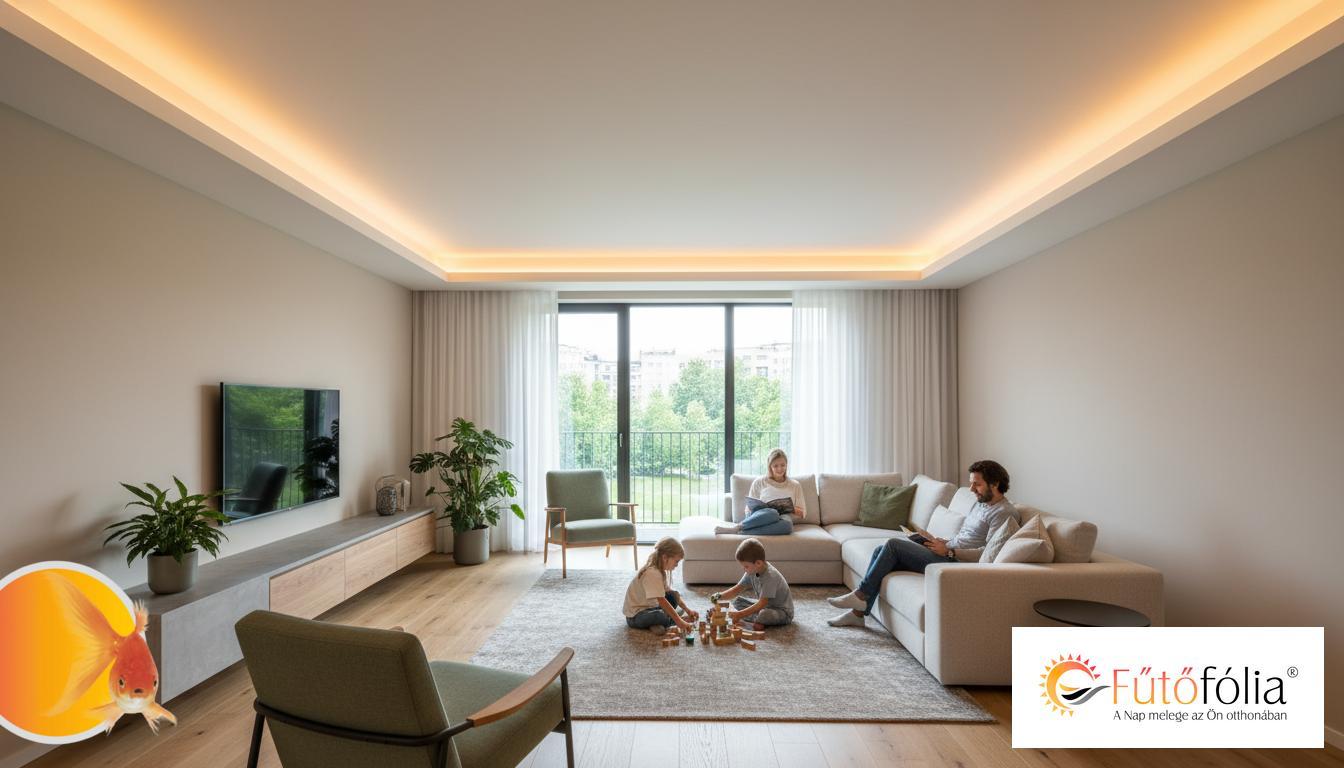
Ceiling heating is a "relative" of underfloor heating: both are surface heating systems, except that the heated surface is above our heads. The heating elements sit inside the ceiling structure, for example behind a plasterboard lining, so nothing of the system is visible and it places no limits on how you arrange your furniture. Unlike a radiator, which mainly warms the air, ceiling heating gives off radiant heat – much like the warmth of the sun.
How does it work?
- Radiant heat: the heated ceiling emits heat as infrared radiation. The radiation passes through the air and is absorbed by solid surfaces – walls, floor, furniture and the human body – which it then warms.
- Even comfort: because surfaces are being warmed, the sense of warmth is more even than with convection systems that heat the air. There is no strong air movement, and less heat stratification, where warm air collects under the ceiling while the floor stays cold.
- Heat storage: in a water-based system, the mass of plaster or lining around the pipes also stores heat, which gives a more stable temperature.
Water-based and electric ceiling heating
- Water-based ceiling heating: hot water circulates in thin pipes within the ceiling. It can be combined with a heat pump and, with the right design, can also be used for ceiling cooling.
- Electric ceiling heating: a thin heating film or heating cable is installed in the ceiling. It responds faster to temperature changes, can be controlled room by room with a thermostat, and pairs well with a solar panel system. You can see completed examples on our ceiling heating page and in the description of an infrared ceiling heating installation in a hunting shop.
The advantages of ceiling heating
- Pleasant warmth: radiant heat gives even warmth throughout the room, with fewer draughts and cold corners.
- Invisible and space-saving: no radiators, no heaters on the wall, and the interior can be designed freely.
- Less airborne dust: without strong air currents, radiant heating stirs up less dust than convection heating.
- Economical operation: because radiant heat warms surfaces and people directly, the sense of warmth stays comfortable at a lower air temperature – in practice, even 2–3°C lower may be enough – which can reduce heating energy demand.
- Quiet: a heated ceiling makes no noise; the electric version has no circulation pump either.
- Alongside solar panels: part of the electricity for electric ceiling heating can come from solar panels, which can lower heating costs. In Hungary, since 1 January 2024, new household solar systems account for the electricity fed into the grid and the electricity drawn from it separately, so the saving also depends on how much power is used while the panels are producing. More in our article on heating with solar panels.
What to consider at the design stage
- Insulation of the ceiling slab: ceiling heating also loses heat upward if the slab or attic is not properly insulated.
- Prepared structure: the amount of heating film is determined room by room during design. If the suspended ceiling structure is not built for it, the planned quantity may not fit and the room will not get the warmth you want.
- Lights and fittings: the positions of recessed lights and vents must be marked out in advance so the heating element is not damaged and the heated area is not reduced.
- Room height: radiant heating must be sized to the room height and the size of the heated surface – we check this during the on-site survey.
When is ceiling heating the best choice?
- In new construction: the system is easy to integrate already at the design stage.
- In a full renovation: worth considering as part of a comprehensive heating upgrade.
- When aesthetics and use of space matter: for a clean interior without radiators.
- When comfort is the top priority: it gives even, draught-free warmth.
- When you are looking for low running costs: especially in a well-insulated house with well-set controls.
- When heating cannot go under the floor covering: for example where an existing floor is to be kept. If heating can go under the floor, comparing underfloor heating and its water-based and electric versions will help you decide.
Summary
Ceiling heating is a comfortable, invisible and easily controlled way to heat living space. Radiant heat gives an even sense of warmth, the heating element takes up no room, and the electric version can be controlled room by room. Whether the ceiling, the floor or the wall – or perhaps an infrared panel – is the better heating surface in a particular home depends on the building's insulation, the room height and the floor coverings.
Request a quote — installation anywhere in Hungary
We survey, design and install heating film and infrared heating throughout Hungary. Tell us about your home and we will get back to you.