

3+1 Things You Didn't Know About the Infrared Sauna
Author: Tóth Tamás · 3 min read
How an infrared sauna differs from a Finnish sauna, what temperature it runs at, how to start using it, what we know about its effects – and why home infrared heating is not a sauna, even though it works on the same principle.
An infrared sauna does not heat the air as a Finnish sauna does, but warms the body directly with infrared emitters, so sweating starts at a lower temperature. According to the Cleveland Clinic summary, infrared saunas typically run at about 43–57 °C, and traditional saunas at about 65–90 °C. Below are three things to know about using one – and a plus one about what all of this has to do with heating.
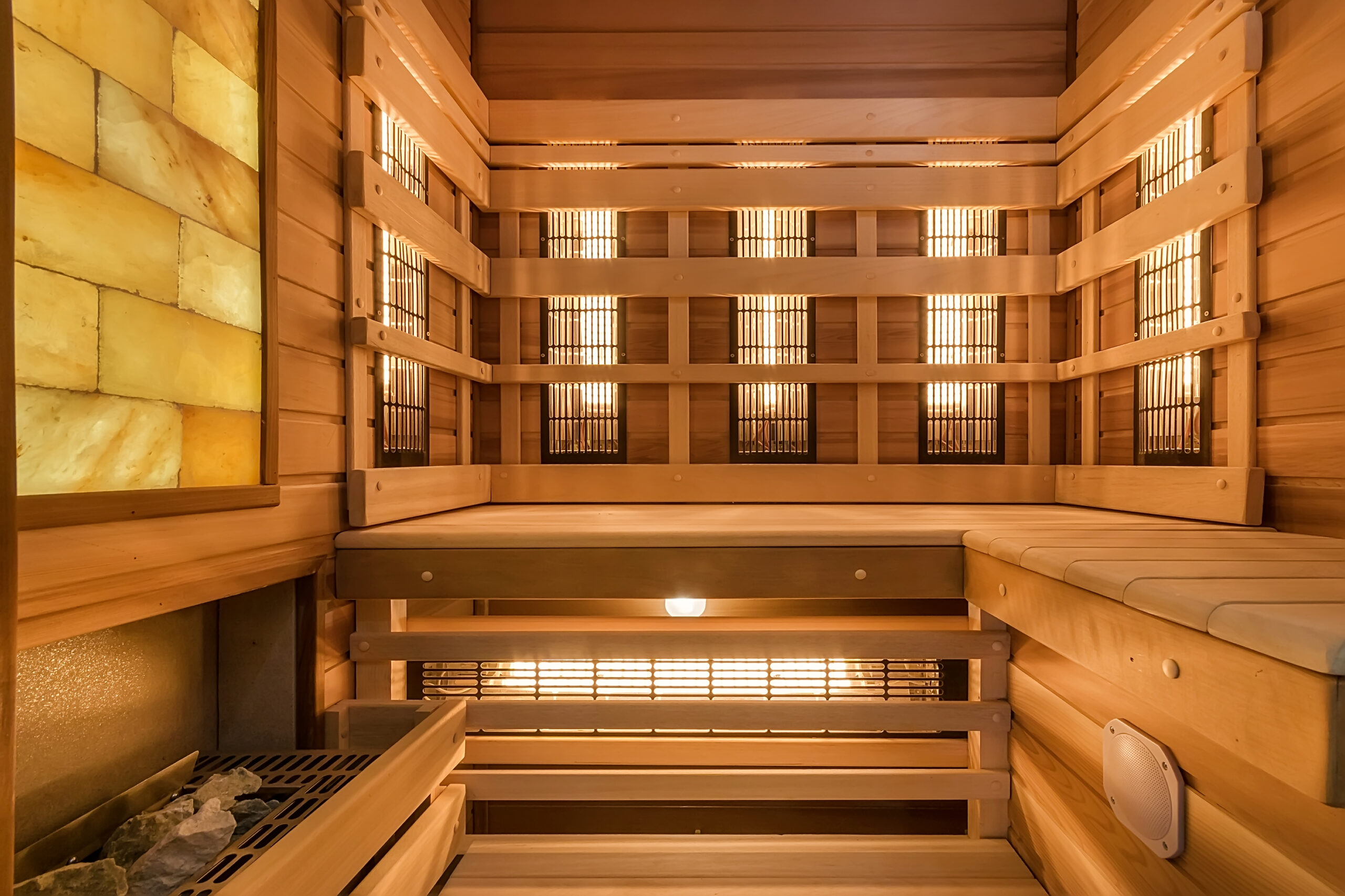
The first: it is not the air that heats, but the radiation
In a Finnish sauna the stove heats the air, the hot air warms the skin, and that is what starts the sweating. The emitters of an infrared sauna, by contrast, warm the body surface directly, and the air in the cabin heats up less. This is why many find it friendlier: the heat effect is felt on the skin while the air is not scorching. For anyone who finds a Finnish sauna too hot, or has no time for a longer sauna, this can be a good alternative.
The second: start gradually, and drink enough
According to the Cleveland Clinic's advice, a beginner should start at a lower temperature, about 43 °C, with sessions of 5–10 minutes, and increase the time only gradually. Even an experienced user is advised sessions shorter than 30 minutes and at most 3–4 saunas a week. The body loses a lot of fluid through sweating, so bring water, and avoid alcohol. If you start to feel dizzy or nauseous, leave the cabin immediately.
The third: we know less about its effects than is promised
Many kinds of beneficial effects are attributed to the infrared sauna – pain relief, stress relief, weight loss, detoxification. Research supports some of these only weakly or with single studies, and detoxification has not been confirmed at all. It should be avoided during pregnancy, with certain illnesses and in acute illness. How much evidence there is for each effect and who should not use one, we have summarised in detail in our article on the effects of the infrared sauna.
The plus one: home infrared heating works on the same principle – but it is not a sauna
You can also build a home infrared sauna cabin, but this involves considerable cost and space, so it cannot be done in every home. We are often asked whether infrared heating replaces a sauna. It does not: the common point is the principle of operation, radiant heat, which warms the surfaces and the person, not the air. Heating, however, heats to room temperature, so it does not give the effects of a sauna – but it does give even, pleasant warmth.
Infrared heating has several forms, from the wall-mountable infrared panel to heating film built in behind the floor covering. Heating film can be installed in any home that has a power source and a floor, wall or ceiling: it goes under the floor, above the ceiling or into the wall, so it takes up no space and is not aesthetically disturbing. Its only visible part is the thermostat, which in certain cases can also be controlled from a smartphone. When the article was published, in 2023, we installed the 3rd-generation version of intelligent heating film; today we build in 4th-generation heating film. We give a 15.5-year warranty on 4th-generation heating film if we carry out the installation.
If you would like to know how intelligent heating film would work in your home, request a quote (installation is available in Hungary), or contact us on +36 20 400 7400 or at info@futofolia.hu.
Wishing you a pleasant day:
Tamás Tóth
and the Intelligent Heating Film team
Request a quote — installation anywhere in Hungary
We survey, design and install heating film and infrared heating throughout Hungary. Tell us about your home and we will get back to you.