

Heating Film Power Output: Which Type of House Suits Heating Film Best?
Author: Tóth Tamás · 3 min read
What power output of heating film does a house need? Among films from 25 to 400 W/m², heat loss, ceiling height and insulation decide; self-regulation, passive houses and supplementary heating in an old house.
Heating film can be installed in practically any house, from an old building with high ceilings to a passive house. The difference lies in the power output: films are available with an output between 25 W/m² and 400 W/m², and which one, and how large an area, goes into a room is determined mainly by the heat loss of the building - the insulation, the ceiling height and how modern the building is.
What is the connection between house type and power output?
A well-insulated room of average ceiling height can be kept pleasant with a lower output; an uninsulated room with a high ceiling needs more. We therefore design the output and the film area room by room, based on the characteristics of the building. The film installed today is presented on the 4th-generation heating film page, and the types of radiant heating are compared on our page about infrared panels and heating films.
Self-regulating heating film
When this article was published (2022), 3rd-generation heating film was the newest and the one we recommended most; today we install 4th-generation heating film. One of the main properties of 3rd-generation film was self-regulation: as the temperature rises, the resistance of the carbon paste increases, so the power drawn falls. The 4th-generation heating film installed today is also self-regulating: where furniture or a rug covers it, it automatically reduces its output. When switched on, the film starts at full power, then as it warms, its output gradually decreases until the thermostat switches off. This saves energy compared with older, constant-power films and reduces the risk of local overheating. Regardless, the condition for safe operation is professional design and installation.
Passive house and modern house
In a modern, well-insulated house heating film is enough even at a low output, and supplemented with a solar system, part of the heating's electricity demand can be covered by your own generation. This fits the passive-house approach, whose aim is to minimise running costs. Solar panels can reduce the electricity cost of heating, but we cannot promise to eliminate it: in Hungary since 1 January 2024, gross billing applies to new household systems, so a summer surplus does not cover winter heating, and only systems applied for by September 2023 and commissioned by 1 January 2026 can remain on net metering, and those for a maximum of 10 years.
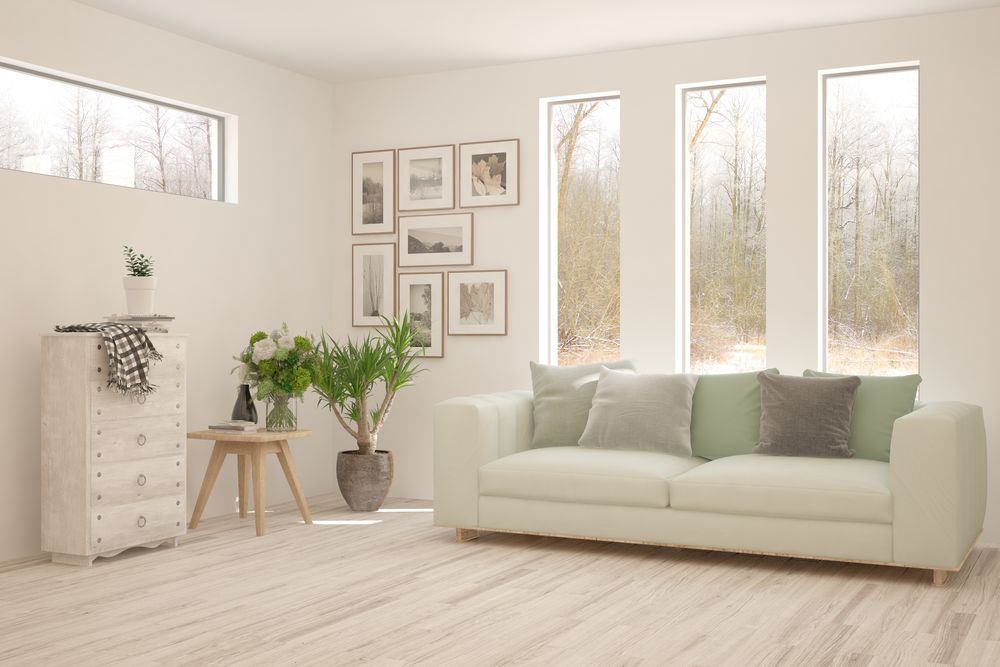
Interior designers also like working with heating film, because it can be hidden under the floor covering: there is no radiator to which the furniture has to be adapted, no boiler room is needed, so clean, large spaces can be created.
Installing heating film in my parents' house
Heating film can be a good choice in an older house too, even as supplementary heating. In houses with boilers or wood heating it is common that in winter people do not want to heat the whole building, and 1 room would be enough - which is hard to solve with conventional systems. Heating film installed in one room or in the bathroom, however, can be controlled independently, so it can give pleasant warmth, for example, to a newborn child or an older family member. The video below is about this topic too:
What output of film your house needs, we plan on the basis of an on-site survey. You can also request a quote on the quote request page, or call us: +36 20 400 7400, email: info@futofolia.hu (installation is available in Hungary).
Request a quote — installation anywhere in Hungary
We survey, design and install heating film and infrared heating throughout Hungary. Tell us about your home and we will get back to you.