

Electric Panel Heaters: Efficiency and Comfort at Home
Author: Tóth Tamás · 3 min read
How efficient and comfortable is an electric panel heater? Convection and infrared types, advantages, limits and smart control – and when economy depends on insulation.
An electric panel heater is convenient because it is simple to mount on a wall, needs no chimney or pipework, and can be controlled precisely with a thermostat. Its efficiency depends not so much on the appliance as on the insulation of the house and the control: in a well-insulated room, with smart timing, it can be economical, but in a poorly insulated home it is expensive to run.
Electric panel heaters are becoming more and more popular. They come in various forms, sizes and technologies; below we show how they work, what advantages they bring, and what limits you have to reckon with.
The basics of electric panel heaters
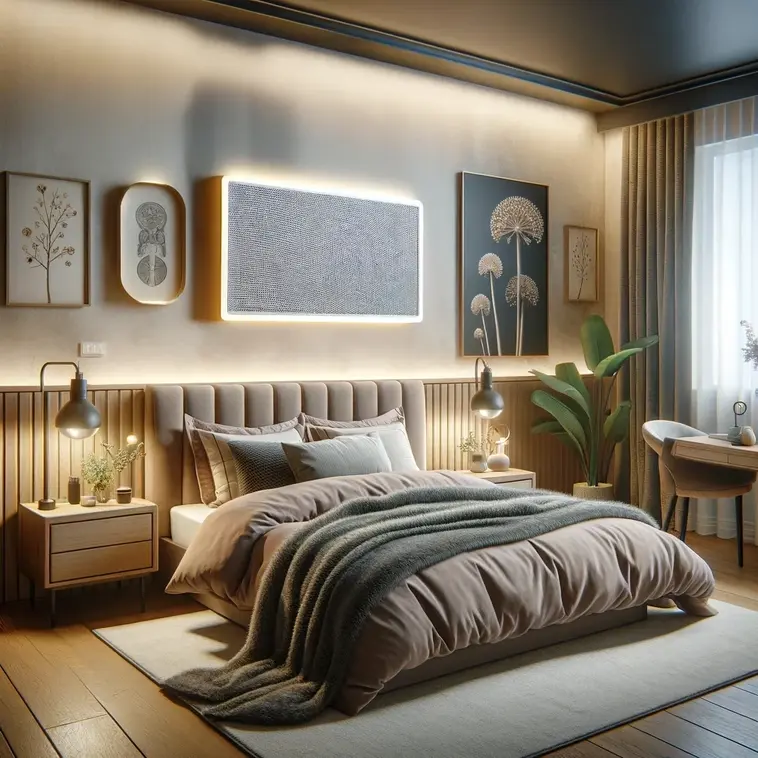
Electric panel heaters convert electricity into heat on site and pass it to the living space. There are two main types: convection and infrared heating panels. The convection type warms the air and circulates it in the room; the infrared model warms objects and people directly, which gives a more direct, sunlight-like thermal sensation. The choice is wide: they are available in many places, from store chains to specialist shops. You can read a detailed comparison of the two types in our article on electric panel heaters or infrared panels.
Advantages and limits
Why many people choose them
Many new models come with a digital thermostat and timer, which help optimise energy use and reduce heating costs. Since the panel burns no fuel, no chimney or extraction equipment is needed, which also simplifies installation and maintenance. In many cases installation is just mounting the appliance on the wall and connecting it to the electrical network; for a hard-wired panel this should be done by an electrician.
What you have to reckon with
Running costs can be high, especially if the home is not properly insulated: the panel then has to make up a lot of heat, and this shows on the bill. The initial investment is generally lower than for other heating systems, but long-term energy prices are also worth considering. Gas heating or a heat pump system may have a higher initial cost but can be more economical over a longer period – you can find a comparison with today's figures in our article on the costs of heat pumps and infrared heating.
Smart control and directions of development
As technology advances, electric panel heaters are getting smarter. The latest models already include IoT (internet of things) technology, so the heating can be controlled from a smartphone, even remotely. This is convenient and helps you avoid heating an empty home: the heating can be started before you arrive, and turned down while you are away.
Summary
An electric panel heater can be a good choice in many homes, especially where simple installation and minimal maintenance matter. It is convenient and easy to control, but it is worth weighing the long-term costs and the features of the flat or house in advance – above all the insulation. If you are planning invisible, lasting heating for a whole home, other forms of electric heating, such as heating film built under the floor covering or into the ceiling, may also be worth considering.
Request a quote — installation anywhere in Hungary
We survey, design and install heating film and infrared heating throughout Hungary. Tell us about your home and we will get back to you.