

Electric Panel Heater or Infrared Panel?
Author: Tóth Tamás · 5 min read
Electric panel heater or infrared panel? A panel heater warms the air by convection, an infrared panel warms surfaces by radiation. How they work, a comparison table, shared advantages and tips for choosing the one that suits your room.
The main difference is the way heat is given off: an electric panel heater heats by convection, warming the air, while an infrared panel mainly heats by radiation, directly warming the body, objects and walls. A panel heater quickly warms the air of a room, and the walls and objects warmed by an infrared panel keep the warmth longer. Which is better depends on the room and how it is used.
Both belong to the family of electric heating: they produce heat on site, without combustion, and can be used as supplementary or permanent heating. It is therefore worth looking at how they work first.
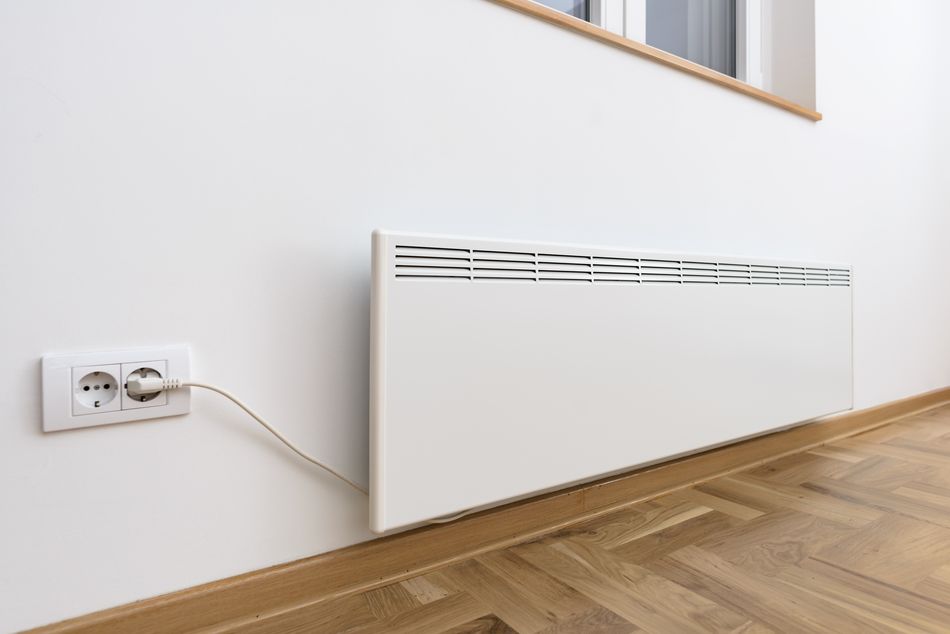
How does an electric panel heater work?
An electric panel heater works without a fan, on the principle of convection: cold air flows in at the bottom of the unit, passes through the heating element, and leaves warmed into the room's air space. The built-in thermostat switches the heating off when the desired temperature is reached and back on by itself when it cools, so the panel does not draw power continuously – for what share of the heating time depends on the heat loss of the room. In the types sold at the time of writing, the heating element was an alloy enclosed in a ceramic housing, which works at a low temperature without glowing; this is gentle on the material, but it is not a promise of service life.
How does an infrared panel work?
An infrared panel gives off most of its heat as infrared radiation, so it does not heat through the surrounding air. The radiation warms the people, objects and surfaces in its path, and these then pass the heat on to the air as well. The surface of the warmed walls is warmer than with heating that warms the air, so less moisture condenses on them – an advantage in older buildings with cooler walls too. In a room with a high ceiling it is worth bringing the panel closer, for example mounting it on a suspended ceiling, and in a bathroom only a type that the manufacturer approves for wet rooms should be installed.
Panel heater and infrared panel side by side
| Aspect | Electric panel heater | Infrared panel |
|---|---|---|
| Heat output | convection: warms the air | mainly radiation: warms surfaces and people |
| Sensation | the air warms quickly, warm air rises | direct, sunlight-like warmth; less noticeable farther away |
| Air movement | the rising air can also move dust | does not rely on air currents |
| Placement | typically on the wall, low down | on the wall or ceiling, in a central position |
| After switching off | the air cools quickly | the panel cools quickly, while the warmed walls and objects keep the warmth longer |
What is true of both: 5 advantages
- Quick warmth. Both solutions create a pleasant thermal sensation in a relatively short time; the infrared panel also warms the walls and objects.
- Simple installation, no boiler service. No boiler or pipework is needed, there is no combustion, so no risk of carbon monoxide leaks, and the annual boiler service is not needed. Portable types can be plugged into a socket; for a fixed panel wired to a thermostat or the mains, wiring should be done by an electrician.
- Precise control. Many types are available with a digital thermostat, whose accuracy is often ±0.5 °C, so the room stays at the desired temperature.
- Smart control. Some devices are also compatible with intelligent central control and can be programmed from a phone or tablet over WiFi or Bluetooth.
- Smaller investment. Purchase and installation typically cost less than building a wet central heating system. Running costs, however, depend on the price of electricity and the insulation of the house – you can make an estimate with our electric heating calculator.
Tips for choosing
- Know the types. The infrared panel is for those who like direct, radiant warmth. A convection panel heater warms the air evenly and also works well in rooms with a larger air volume. An oil-filled radiator warms up more slowly but keeps its heat longer, and is quiet.
- Size it to the room. A lower-power unit is enough for a smaller room; a larger one needs a more powerful unit or more panels. The required power is determined by the heat loss, not only by the floor area.
- Think about consumption. Direct electric heating converts the power it draws practically entirely into heat, so in consumption good control, timing and correct placement are decisive.
- Comfort and safety features. Built-in thermostat, timer, remote control; overheating protection and child lock.
- Design. Choose a design that suits the style of the home.
- Value for money. Do not look only at the purchase price: quality, warranty terms and the expected running cost also matter.
Which should you choose?
If you need to quickly warm the air of a rarely used room, or are looking for simple supplementary heating, a convection panel heater is also a good solution. If you like direct, radiant warmth, it matters that the air does not move, or the walls are cool and damp, the infrared panel is the better choice. For lasting, invisible heating of a whole home, built-in heating film is also worth considering – we describe the differences in our comparison of infrared panels and heating film. Choosing the right heater determines the comfort and heating cost of a home for a long time, so it is worth weighing carefully.
Do you have a question, or would you like a quote? Call us on +36 20 400 7400, write to info@futofolia.hu, or use our quote request page. Installation is available in Hungary.
Request a quote — installation anywhere in Hungary
We survey, design and install heating film and infrared heating throughout Hungary. Tell us about your home and we will get back to you.