

Why Is Infrared Heating Ideal for Allergy Sufferers?
Author: Tóth Tamás · 4 min read
Infrared heating warms surfaces by radiation and does not rely on air currents, so it stirs up less dust than heating that circulates air. What an allergic family member can expect from it at home, and what not.
Infrared heating is a good choice for a home where a family member has a dust allergy or asthma, because it warms surfaces and the body directly by radiation and does not circulate the air, so it stirs up less dust than radiator or convector heating. It is not a cure: it does not remove the cause of the allergy, but because it does not circulate air, it stirs up less of the dust that has settled in the home.
Heating for allergy sufferers is good not only because it gives pleasant warmth, but also because it does not worsen the indoor air. Below we show how infrared heating differs in this respect from conventional solutions, and what you can expect from it.
What is infrared heating?
The infrared panel, heating film built into the ceiling or floor and other infrared heating are electric heating that warms the objects, walls and people in a room by infrared radiation. The heat release is similar to sunshine: it is not the air that warms first, but the surfaces, and they then pass on the heat.
With conventional convection heating the heater warms the air, and the rising warm air sets up a flow in the room – this flow carries the dust and the allergens in it along as well.
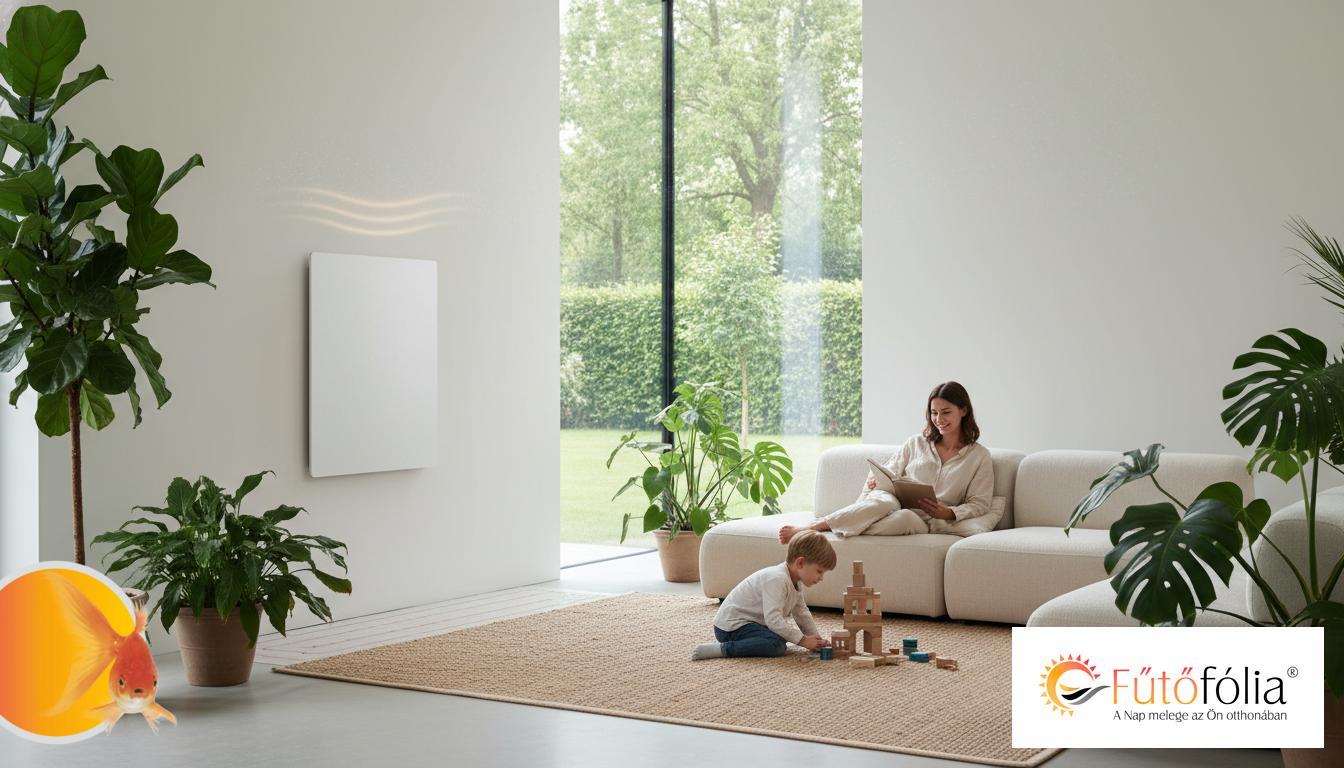
The advantages of infrared heating in the home of allergic family members
Less dust stirred up
One common complaint of dust allergy sufferers is dust and allergens in the air: pollen, dust mite droppings and other tiny particles. Radiator and convection heating continuously move the air while running, and with it the dust.
Infrared heating is not based on warming and circulating the air, so dust gets into the air less, and instead settles and can be removed by cleaning. How much this means for symptoms differs from person to person; we write about the other elements of defence against dust mites – bedding, textiles, humidity – in our article on dust mites, and you can read about the effects of airborne dust in our interview with a pulmonologist.
Even, draught-free warmth
With infrared heating, the objects in the room, the floor and the walls warm up gradually, so a balanced sense of warmth develops, without noticeable temperature swings and draughts. An even temperature is more comfortable for everyone, and because there is no air movement, it does not drive dust around the home either.
Less dry air
Because radiant warmth reaches the body and the surfaces, the sense of warmth is generally pleasant at a lower air temperature. The less the air has to be warmed, the less its relative humidity drops – and air that is too dry is unpleasant for many people. Even so, it is worth watching the humidity, because a home that is too humid favours dust mites and mould.
Further considerations
- Smaller heat demand: because a lower air temperature is enough for comfort, the heating can give pleasant warmth with less energy; we write about consumption in detail on the consumption page.
- Simple installation, easy to keep clean: an infrared panel can be mounted on the wall or ceiling, needs no regular maintenance, and its smooth surface can simply be wiped – there are no fins between which dust would settle. Heating film built into the floor or ceiling is not visible at all.
- Silent operation: no fan, no hum, which is especially pleasant in the bedroom.
- No combustion in the home: electric heating produces no smoke or combustion products on site.
Many people also ask about the electromagnetic field when looking for health-conscious heating: we present our own measurement on the electrosmog page.
In which rooms is infrared heating recommended?
Infrared heating is a good choice for heating several rooms if you live with an allergic family member: it can be built into the bedroom, living room and bathroom alike. It is worth considering especially in homes where surfaces often gather dust with air-circulating heating and the allergic members of the family complain about the air in the home.
Summary
Infrared heating can be recommended for the home of allergic family members because it stirs up less dust and the allergens in it, gives even, draught-free warmth, and does not dry the air unnecessarily. It does not replace medical treatment and regular cleaning, but it can improve the air in the home while providing comfortable, quiet heating.
If you are also thinking of upgrading your heating because of dust allergy, asthma or other respiratory sensitivity, request a quote from us (installation is available in Hungary) – we will help you choose what infrared heating suits where.
Request a quote — installation anywhere in Hungary
We survey, design and install heating film and infrared heating throughout Hungary. Tell us about your home and we will get back to you.