

The History of Underfloor Heating
Author: Tóth Tamás · 4 min read
The ancient Romans already used underfloor heating: warm air from the furnace of a hypocaust flowed under a double floor. How this heating method progressed to plastic pipes, then to electric and infrared underfloor heating.
Underfloor heating is not a modern invention: the ancient Romans already used it under the name hypocaust, when the warm air of a furnace flowed through the air gap between a double floor and heated the upper floor. In Hungary it spread in the early 1980s after heat-resistant plastic pipes appeared, and today electric and infrared underfloor heating are also available.
Ancient underfloor heating was of course not identical with today's systems, but in its time it was an effective solution. Building it required serious expertise, and it was expensive too: even well-off families had it installed only in the more important rooms of their homes. Below we follow how this heating method progressed from Roman baths to today's electric underfloor heating.
How did underfloor heating work in antiquity?
We hear a lot about the developed bathing culture of the ancient Romans: most settlements had a bath. Where a thermal spring supplied warm water, this was easy to arrange; elsewhere the warmth had to be produced artificially. The hypocaust served this purpose, which was used to heat residential buildings as well as baths.
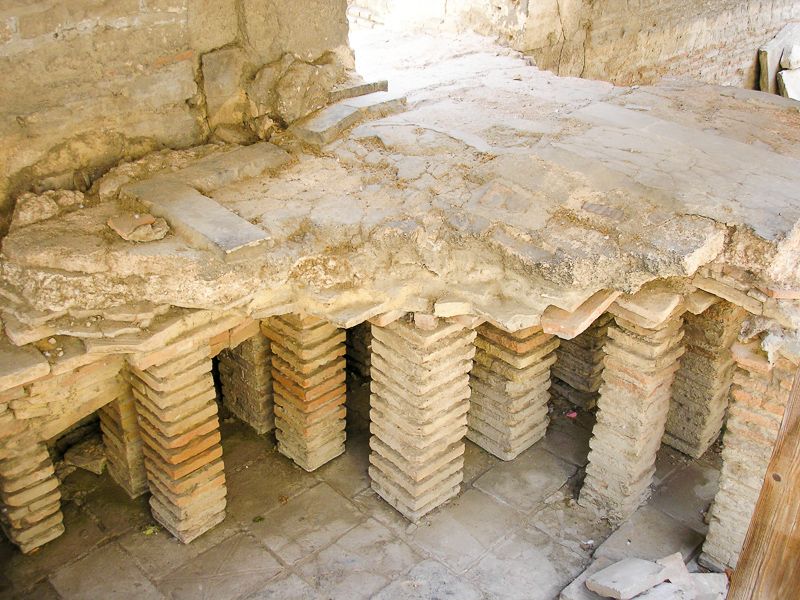
The three main parts of a hypocaust
- Furnace chamber: essentially a furnace, placed outside the building. There was no chimney yet, only rudimentary smoke vents, so most of the combustion products left through the mouth of the firebox.
- Double floor: brick pillars 30–40 cm high were set on the lower floor, 15–20 centimetres apart, and these held up the upper floor layer. The warm air flowing in the air gap between the two floors heated the upper floor.
- Vents in the wall: air flowed in through these, and this kept the warmth moving between the floors, so the floor warmed through everywhere.
The floor of the baths could be so hot that visitors had to wear special slippers so as not to burn their feet.
From ceiling heating to underfloor heating with plastic pipes
Radiant ceiling heating in the 1930s
In England in the 1930s an early form of radiant ceiling heating appeared: thick-walled steel pipes were cast into the concrete slab. This method did not become widespread. After the war, steel-pipe installations were laid on the supporting structure without thermal insulation, but this did not work out: users found it uncomfortable.
The spread of underfloor heating
Underfloor heating really began to spread when heat-resistant plastic pipes were developed; in Hungary it started its journey in the early 1980s. By now it has become one of the most popular heating methods. You can walk barefoot in the home even in winter, children can play on the floor without worry, the heat is distributed evenly, and the sense of warmth is pleasant at the height of the feet, trunk and head alike. When furnishing, a further advantage is that there are no radiators on the walls, so there is more free space.
Electric underfloor heating and infrared underfloor heating
Electric underfloor heating
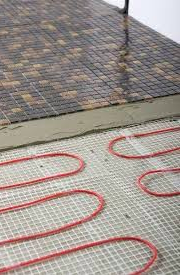
Electric underfloor heating can be installed quickly and relatively simply. With it came room-by-room control: every room can be set to a different temperature, so less-used rooms do not have to be heated unnecessarily. Most people, for example, prefer to sleep in a slightly cooler room, but in the bathroom they like the warmth.
Installing electric heating does not require complicated, time-consuming work. The heating element can be placed in the concrete during construction, and later between the concrete and the floor tile, and because of its small height it needs no separate build-up of layers. It is available in various sizes and lengths, which speeds up installation, and the power can be matched to the building's heat loss. You can see our heating mat range here.
Infrared underfloor heating
One newer branch of underfloor heating is building infrared heating into the floor. It keeps the advantages of electric underfloor heating and heats by radiation: it warms surfaces and objects and does not circulate the air, so it stirs up less dust.
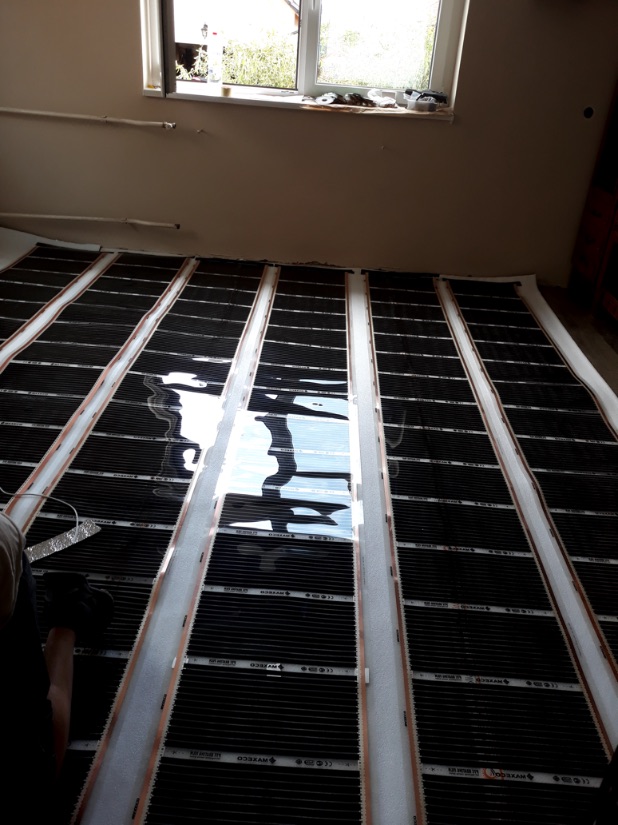
With the right build-up it can be built in under most floor coverings – how well each floor covering suits it is detailed in our article on choosing a floor covering. When the article was published, in 2021, the total height of the heating system we installed was 6 mm. We wrote about the discovery of infrared radiation itself and the path of infrared heating in our article on the history of infrared heating.
Planning underfloor heating? Request a technical recommendation (installation is available in Hungary); our experts will help with the planning.
Request a quote — installation anywhere in Hungary
We survey, design and install heating film and infrared heating throughout Hungary. Tell us about your home and we will get back to you.