

6 Myths About Solar Panels That Most People Actually Believe
Author: Tóth Tamás · 5 min read
Does it ruin the roof, not produce in cloudy weather, cost too much, not pay off? Six common solar panel myths, and what the real situation is today, in the era of gross metering – what to watch for before deciding.
The six most widespread solar panel myths – that panels ruin the roof, do not produce in cloudy weather, need constant maintenance, are too expensive, do not pay off, and reduce the value of the property – are in general not true. Each has a real core, however, that has to be watched at the design stage, and a few old arguments stand differently today because of the gross metering introduced in Hungary in 2024. We go through each myth and what the situation really is.
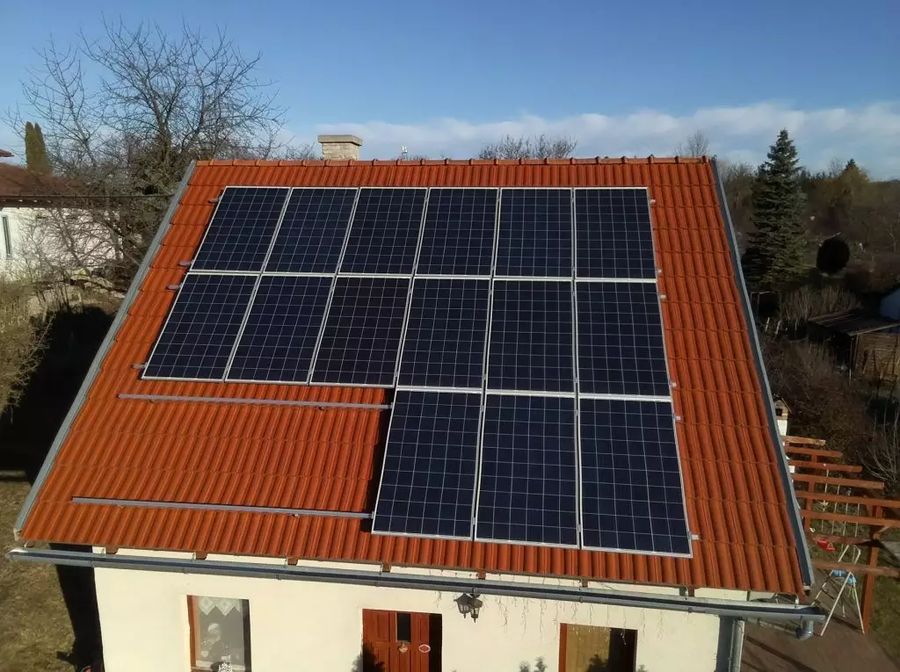
Although more and more households have solar panels installed, many people are still distrustful of the technology. Using solar energy is not new, but it is not as familiar as conventional energy sources, so there are many misunderstandings about how it works and how economical it is.
Myth 1: it ruins the roof
Many people fear that the roof will be damaged when the panels are fixed, or even have to be rebuilt. With professional installation, fixing the mounting structure does not damage the roof structure, and the panels can be removed later as well. Exactly what fixing is needed, and whether it involves drilling, depends on the type and condition of the roof – tile, sheet-metal and flat roofs each need a different solution – so the installer has to decide this on site. For an old roof in need of renovation, it is worth doing the renovation before the solar panels are installed.
Myth 2: it does not work without sunshine
A solar panel also produces in overcast, rainy weather and in winter, only less than on clear summer days. Cells work with lower efficiency in great heat, so cooler, sunny weather particularly suits them. The other side of the balance is that winter production falls well short of summer production – this matters mainly for electric heating, which needs the most electricity precisely in winter. How big the difference is, and how it is worth planning around it, is shown in our article on the winter production of solar panels.
Myth 3: it needs constant maintenance
Every piece of equipment needs attention, but there is a big difference between whether this means an occasional check or a daily concern. A solar system is the former: the basis of its reliable operation is a good-quality manufacturer, professional installation and an available service team. It is worth cleaning the panel surface from time to time, which can usually be done simply, with water. You will find more detailed information on how solar systems work on our solar panel page.
Myth 4: too much money has to be invested
Like most new technologies, solar panels were expensive when they appeared on the market, and for many people that image has stuck. Since then prices have fallen significantly, and among models of different power and price one that fits the budget can be chosen; this article of ours covers how prices have developed. The payback time, however, cannot be generalised: it depends on the price of the system, the house's consumption and how much of the electricity generated the household uses while it is being produced.
Myth 5: it does not pay off
The old argument was that it does not matter how much electricity the house uses and when, the bill will fall over time anyway. In the era of net metering this was largely true, because annual production and consumption were compared. Today the picture is more nuanced: since 1 January 2024, for new household systems in Hungary the electricity fed into the grid and the electricity drawn from the grid are measured and billed separately. Only systems applied for by September 2023 and switched on by 1 January 2026 at the latest can keep the more favourable annual net balance, and even they for a maximum of 10 years.
With a new system it therefore matters whether consumption happens during the day, at the same time as production, or in the evening and at night. It is worth timing the big consumers – for example the washing machine, water heating or car charging – for sunny hours and adjusting the size of the system to actual consumption habits. This way a solar panel system can still noticeably reduce the electricity bill today.
Myth 6: it reduces the value of the property
Anyone who is also thinking of moving rightly asks what will happen to the solar panels if they sell the house. A working, documented, well-kept system means a lower expected electricity bill for the buyer, so it may be more an argument for the property than against it; we cannot promise a general, numerical increase in value, however. If the owner wants to take the panels along, they can be professionally dismantled and reinstalled, but dismantling, transport and obtaining grid approval at the new site also cost money.
What to watch for before deciding
Many people believe these 6 myths, yet reality is more complex. Before you reject it or rush the decision, look into the facts and pay attention to these:
- choose the product of a reliable manufacturer, and clarify what manufacturer warranty applies to the panels and the inverter;
- the installer should survey both the roof and the house's consumption, and not just give a quote on the basis of phone data;
- the payback should be calculated with gross metering and your own consumption habits;
- with electric heating, think through the winter consumption separately – our analysis of the real savings of solar heating gives pointers.
Request a quote — installation anywhere in Hungary
We survey, design and install heating film and infrared heating throughout Hungary. Tell us about your home and we will get back to you.