

Say No to Horrific Energy Prices
Author: Tóth Tamás · 3 min read
During the 2022 energy price rise we recommended heating film run on solar power. What remains valid today, in the era of gross billing, and which advantages really follow from the principle of radiant heating.
During the summer 2022 energy price rise we recommended that part of the heating be covered by self-generated solar electricity, with electric heating - for example heating film - in the house for that purpose. The idea is still valid today, only on different terms: solar panels can moderate the electricity cost of heating, but with new systems you cannot count on heating costing nothing.
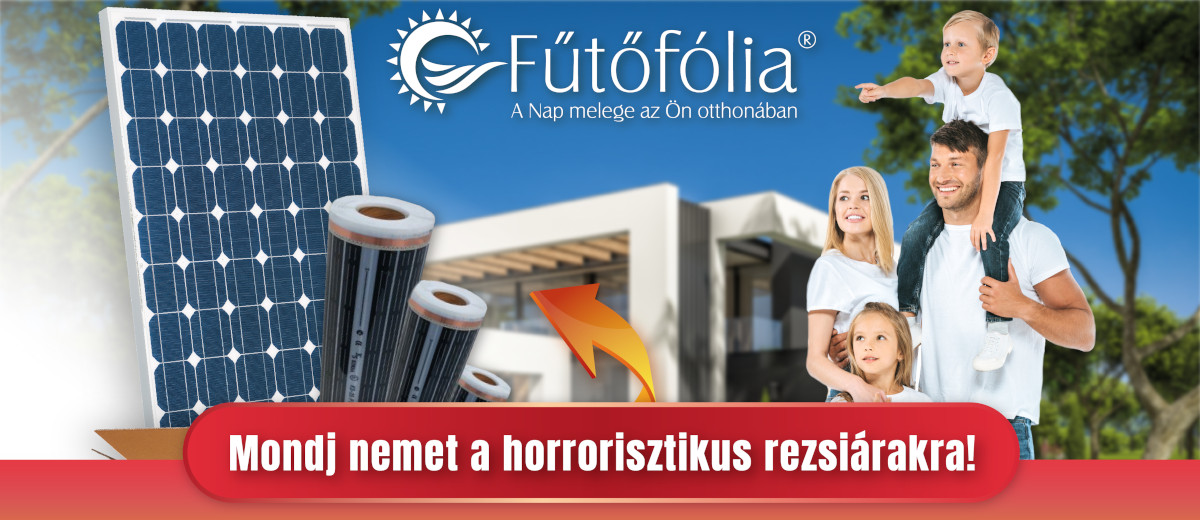
What happened in summer 2022?
In the days before this article was published, it was announced in Hungary that the regulation of household energy prices would change: for consumption above the average level of gas and electricity use, households would have to pay a market-based price, much higher than before. In many families the question arose of how to avoid the cost of heating rising to a multiple.
What did the article suggest?
One advantage of electric heating systems is that nothing prevents them from being run by electricity from a renewable source. At household level, solar energy is the most common solution for this. Heating film is fully compatible with solar systems, so the house can use part of the electricity generated on the roof for heating, and the heating produces no combustion products on site.
The 2022 article still started from the idea that with solar panels, running a heating film system costs no money at all. That was built on net metering, which has ended for new systems. Since 1 January 2024, for new household solar panels in Hungary the provider accounts for electricity fed into the grid and electricity bought from the grid as two separate items, so summer surplus generation cannot be credited against winter heating. Only systems applied for by September 2023 and put into operation by 1 January 2026 can remain on annual net metering, for a maximum of 10 years. How heating film and solar panels can be planned together today is presented in our article Heating film and solar panels.
Further characteristics of radiant heating
The old article also listed several favourable effects of heating film. Of these we keep those that follow from the working principle of radiant heating:
- Less air movement, less dust. With radiant heating no strong air flow develops, so it stirs up less airborne dust - which can be favourable for people with respiratory complaints too.
- Warm wall surfaces. The wall surface also warms through, so it is less prone to condensation, one of the common causes of mould.
- Electrosmog. Every electrical device creates an electromagnetic field, heating film too. The result of our own measurement is presented on our page about electrosmog.
What next?
Solar energy does not run out, and electricity generated on the roof can still reduce the cost of heating - if the system is sized to today's billing rules and to the house's winter consumption. You can read about the basics of solar systems in our earlier solar panel summary. You can request a quote on the quote request page; our colleagues are also reachable on +36 20 400 7400 and at info@futofolia.hu (installation is available in Hungary).
Request a quote — installation anywhere in Hungary
We survey, design and install heating film and infrared heating throughout Hungary. Tell us about your home and we will get back to you.